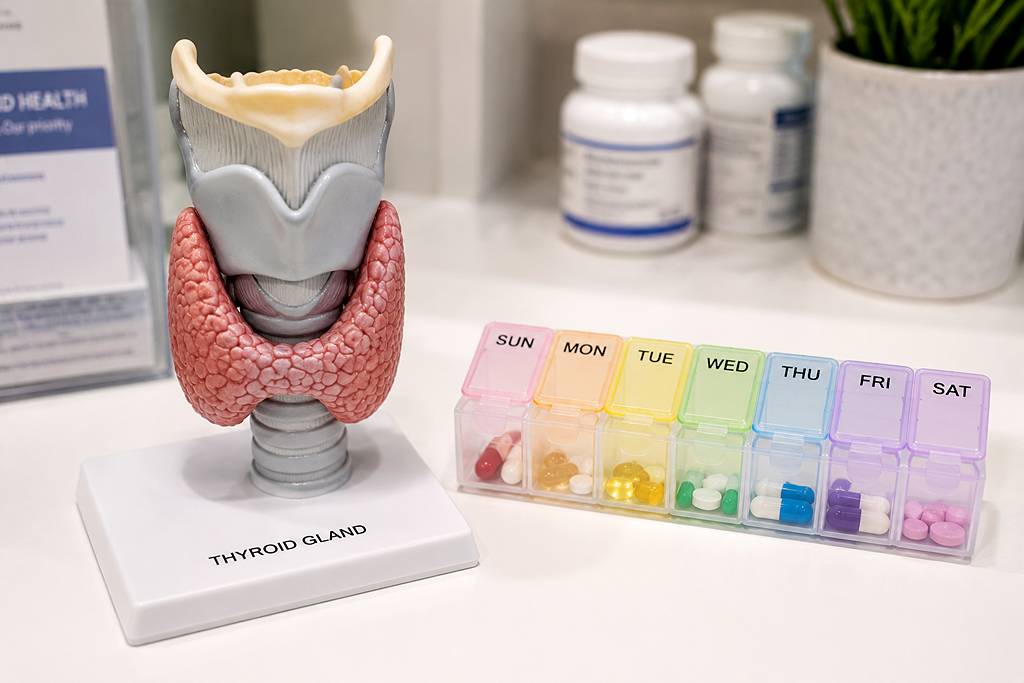
Medically Reviewed by: Dr. Matthew Stanizzi, MD Board-Certified Urologist | Medical Director, BioRestore Health | 12+ Years in Clinical Urology | Last Updated: July 2025
Thyroid hormone replacement therapy is the standard medical treatment for hypothyroidism. This condition occurs when the thyroid gland fails to produce adequate levels of hormones the body needs. These hormones regulate metabolism, energy, and organ function. For most patients, thyroid hormone replacement therapy involves daily oral medication. This medication restores circulating thyroid hormone levels to a normal, functional range.
Table of Contents
- Who Actually Needs Thyroid Hormone Replacement
- How Thyroid Hormones Work in the Body
- Thyroid Hormone Replacement Medication Options: T4, T3, and Combination Therapy
- Dosing, Monitoring, and Adjustments
- Why Some Patients Still Feel Unwell on Thyroid Hormone Replacement
- Thyroid Hormone Replacement Therapy and Other Hormonal Systems
- What the Research Says About Thyroid Hormone Replacement Outcomes
Who Actually Needs Thyroid Hormone Replacement
Hypothyroidism is far more common than many people realize. According to the American Thyroid Association, approximately 20 million Americans have some form of thyroid disease. Additionally, the CDC estimates that roughly 4.6% of the U.S. population aged 12 and older are affected. NHANES data from 2023 showed an age-standardized prevalence of thyroid disease at 5.05% between 2015 and 2018. This represents a meaningful increase compared to the 1999-2002 period.
The condition most commonly requiring hormone replacement is primary hypothyroidism. In this condition, the thyroid itself is underactive. This includes:
- Hashimoto’s thyroiditis: An autoimmune condition that gradually destroys thyroid tissue. It is the most common cause of hypothyroidism in the United States.
- Post-thyroidectomy hypothyroidism: Patients who have had their thyroid surgically removed require lifelong replacement therapy. Reasons include cancer, goiter, or hyperthyroidism.
- Radioactive iodine treatment: This approach treats hyperthyroidism or thyroid cancer. It often intentionally reduces thyroid function. As a result, patients need replacement therapy afterward.
- Subclinical hypothyroidism: TSH is elevated in this state. However, thyroid hormone levels (T4/T3) remain within normal range. Treatment decisions depend on symptom severity, TSH level, age, and cardiovascular risk.
Symptoms that prompt evaluation often include persistent fatigue, unexplained weight gain, cold intolerance, constipation, brain fog, dry skin, hair thinning, and depression. Because these symptoms overlap with many other conditions, diagnosis requires blood testing. Specifically, clinicians test TSH (thyroid-stimulating hormone), free T4, and sometimes free T3.
How Thyroid Hormones Work in the Body
The thyroid gland produces two primary hormones: thyroxine (T4) and triiodothyronine (T3). T4 is the more abundant but less active form. Therefore, the body converts it to T3 in peripheral tissues. T3 is the biologically active hormone that binds to receptors in virtually every cell in the body.
This system is regulated by the hypothalamic-pituitary-thyroid axis. The hypothalamus releases thyrotropin-releasing hormone (TRH). This signals the pituitary gland to secrete TSH. TSH, in turn, stimulates the thyroid to produce T4 and T3. When circulating thyroid hormone levels are sufficient, this feedback loop suppresses further TSH release.
Thyroid hormones influence:
- Basal metabolic rate and thermogenesis
- Cardiac output and heart rate
- Protein synthesis and muscle maintenance
- Neurological function and mood regulation
- Bone turnover and calcium metabolism
- Reproductive hormone balance
When thyroid hormone is deficient, these systems slow down in measurable ways. Restoration of adequate thyroid hormone levels through thyroid hormone replacement therapy aims to normalize this wide-ranging physiological impact.
Thyroid Hormone Replacement Medication Options: T4, T3, and Combination Therapy
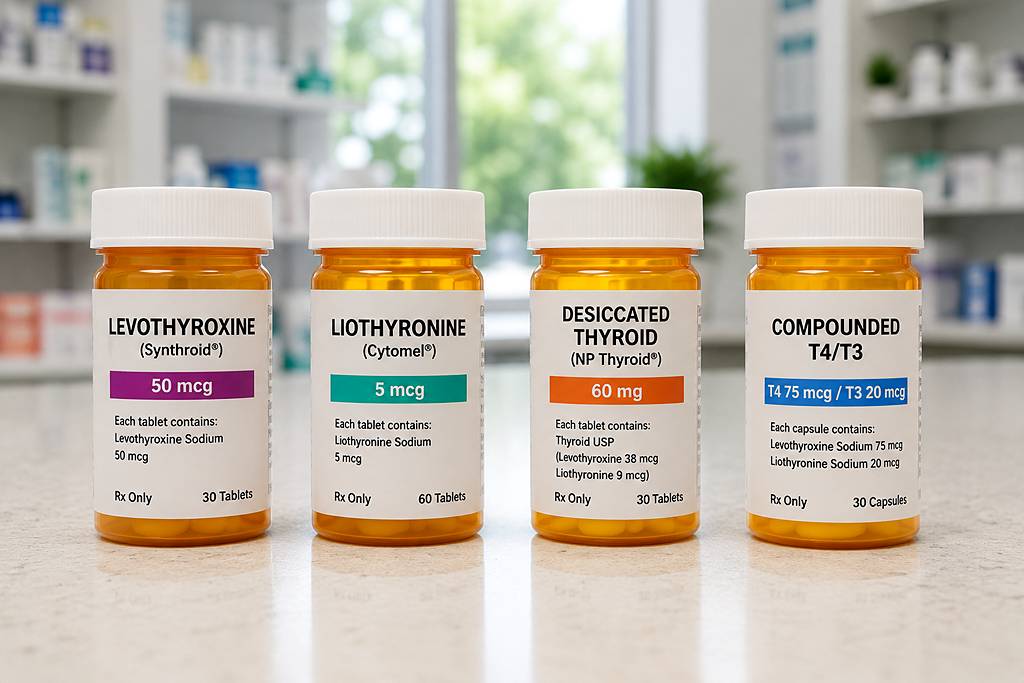
Levothyroxine (synthetic T4) is the dominant treatment option by a significant margin. According to Data Bridge Market Research (2026), the levothyroxine segment led the thyroid disorder treatment market with a 70.50% share in 2025. In 2023, levothyroxine was the most prescribed medication in the United States based on filled prescriptions. It is dosed in micrograms and taken orally once daily on an empty stomach. The body converts it to T3.
Common brand names include Synthroid, Levoxyl, and Tirosint. Generic levothyroxine is widely available. The FDA considers different formulations of levothyroxine as bioequivalent. However, some clinicians and patients note variability between manufacturers. Once a stable formulation is established, switching brands without medical guidance is generally discouraged.
Liothyronine (synthetic T3), sold under the brand name Cytomel, is less commonly prescribed as a standalone treatment. However, it may be considered in specific clinical situations. The global triiodothyronine market was valued at $188 million in 2024. It is projected to reach $234 million by 2032, reflecting modest but steady clinical interest in T3-based therapy. T3’s shorter half-life means it must be dosed multiple times per day. Moreover, it carries a higher risk of cardiovascular side effects at elevated levels.
Combination T4/T3 therapy remains a subject of ongoing clinical discussion. Some patients do not convert T4 to T3 efficiently. This inefficiency results from genetic polymorphisms in deiodinase enzymes. These patients may benefit from adding low-dose T3 to their levothyroxine regimen. This is an individualized decision. It is not standard first-line treatment.
Desiccated thyroid extract (DTE), derived from porcine (pig) thyroid glands, is sold under brand names like Armour Thyroid and NP Thyroid. It contains both T4 and T3 in a fixed ratio. Some patients prefer DTE due to subjective improvements in wellbeing. However, clinical guidelines from the American Thyroid Association generally favor levothyroxine monotherapy as the first-line approach. These guidelines cite more consistent hormone content and a longer evidence base.
| Medication Type | Hormones Provided | Dosing Frequency | Typical Use Case |
|---|---|---|---|
| Levothyroxine (T4) | T4 only | Once daily | Standard first-line treatment |
| Liothyronine (T3) | T3 only | 2-3x daily | Poor T4-to-T3 conversion, adjunct use |
| Combination T4+T3 | Both | Varies | Selected patients with persistent symptoms |
| Desiccated Thyroid Extract | T4 + T3 (fixed ratio) | Once or twice daily | Patient preference, alternative approach |
Dosing, Monitoring, and Adjustments
Getting the dose right is not a one-time event. Initial dosing of levothyroxine is typically based on body weight, age, and degree of hypothyroidism. Physicians often start lower in older patients or those with cardiovascular concerns. The dose is then titrated up gradually.
After starting or adjusting the dose, TSH levels are typically rechecked at 6 to 8 weeks. This timeframe allows the pituitary gland to equilibrate to new circulating T4 levels. For most adults, the target TSH range is generally 0.5 to 2.5 mIU/L. However, this may vary by age, pregnancy status, and the presence of thyroid cancer (where TSH suppression is often the goal).
Key dosing considerations include:
- Levothyroxine must be taken on an empty stomach, 30-60 minutes before food or other medications. This ensures consistent absorption.
- Calcium, iron, antacids, and certain medications can significantly interfere with absorption. These should be taken hours apart.
- Pregnancy substantially increases thyroid hormone requirements. TSH should be monitored more frequently during gestation.
- Older adults may require lower doses to avoid cardiovascular and bone-density risks. These risks are associated with over-treatment.
Annual monitoring is standard once a stable dose is achieved. However, more frequent testing is warranted after dose changes, illness, new medications, or significant weight changes.
Why Some Patients Still Feel Unwell on Thyroid Hormone Replacement

This is one of the most important and frustrating realities of hypothyroidism management. According to the American Thyroid Association (2024), up to 15% of patients with hypothyroidism experience persistent symptoms. These symptoms affect quality of life even when TSH levels appear normal on lab testing.
Several mechanisms may contribute:
- Impaired T4-to-T3 conversion: Some individuals carry variants in the DIO2 gene. This gene encodes a deiodinase enzyme. These individuals have reduced ability to convert T4 to active T3 in tissues.
- Continued autoimmune activity: In Hashimoto’s thyroiditis, the autoimmune process itself may independently affect mood and cognition. These effects occur beyond hormone levels.
- Suboptimal free T3: TSH may normalize while free T3 remains below optimal range. As a result, patients experience residual symptoms.
- Other hormonal imbalances: Thyroid dysfunction rarely exists in isolation. Low cortisol, estrogen fluctuations, or changes in other hormonal axes can compound symptoms significantly.
This is why a functional medicine or hormone optimization approach can be valuable for certain patients. These approaches consider the full hormonal picture rather than a single lab value. They are particularly helpful for patients who feel they have hit a wall with standard treatment.
Thyroid Hormone Replacement Therapy and Other Hormonal Systems
Thyroid hormones do not operate in isolation. Neither should treatment decisions. The endocrine system is deeply interconnected. Shifts in thyroid hormone levels can affect and be affected by other hormonal pathways.
Men experiencing persistent fatigue, weight gain, and low mood may assume the issue is purely thyroid-related. However, low testosterone symptoms in men can mirror hypothyroid symptoms almost exactly. Distinguishing between these conditions requires comprehensive lab evaluation. Additionally, identifying when both are present simultaneously is crucial.
Similarly, estrogen influences thyroid hormone binding proteins. Women on oral estrogen may require higher levothyroxine doses. This is because estrogen increases the production of thyroxine-binding globulin (TBG). This increase reduces the amount of free, active thyroid hormone circulating in the blood. This interaction is particularly relevant for postmenopausal women on hormone therapy. Furthermore, reviewing hormone therapy before and after documentation can help. It allows patients and clinicians to track how overlapping hormonal treatments affect one another over time.
For patients managing hypothyroidism alongside skin concerns, thyroid dysfunction frequently contributes to conditions like acne and scarring. This occurs due to thyroid function’s role in skin cell turnover and sebum regulation. Patients who have seen microneedling before and after results for related skin issues sometimes find that optimizing thyroid levels enhances the durability of those cosmetic outcomes. Moreover, procedures like microneedling for acne scars may be more effective when the underlying hormonal environment is stable and optimized.
What the Research Says About Thyroid Hormone Replacement Outcomes

The clinical evidence supporting levothyroxine as the primary treatment for hypothyroidism is extensive. However, the nuances of outcomes are increasingly the focus of research. A meta-analysis published in The Journal of Clinical Endocrinology and Metabolism (2025) analyzed 11 studies with 2,577 post-thyroidectomy patients. The pooled euthyroidism rate (achieving normal thyroid function) at first follow-up was only 33.9%. This represents high heterogeneity across studies. This highlights how variable outcomes can be in real clinical settings, even when treatment protocols are standardized.
The thyroid hormone replacement therapy market reflects this ongoing demand for better solutions. According to Verified Market Reports (2025), the market was estimated at USD 2.3 billion in 2024. It is projected to reach USD 4.5 billion by 2033, growing at a CAGR of 8.2% from 2026 to 2033. Data Bridge Market Research (2026) placed the broader thyroid disorder treatment market at USD 3.96 billion in 2025. Projections indicate USD 6.85 billion by 2033.
This growth is driven by several key factors. These include rising diagnosis rates, increased awareness of thyroid disease, aging demographics, and a shift toward more personalized, precision-medicine approaches. These approaches focus on more accurate dosing and monitoring.
Disclaimer: This article is for educational purposes only and does not constitute medical advice. Thyroid hormone replacement therapy should only be started, adjusted, or discontinued under the guidance of a qualified healthcare provider.
Things to Know
- Levothyroxine absorption is highly sensitive to timing and food. Taking it within 30 to 60 minutes of eating, or alongside supplements like calcium or iron, can reduce the amount your body actually absorbs. This leads to falsely elevated TSH readings that do not reflect your true medication response.
- TSH alone does not tell the whole story. Some patients with TSH in the “normal” range still have low free T3. This is the biologically active hormone that drives energy, cognition, and metabolism. Asking your physician to test free T3 and free T4, not just TSH, gives a more complete picture.
- Generic and brand-name levothyroxine formulations are FDA-approved as bioequivalent. However, individual patients can respond differently to different manufacturers. If your symptoms change without a dose adjustment, a switch in manufacturer by your pharmacy may be a contributing factor worth investigating.
- Hypothyroidism and depression share significant symptom overlap. Fatigue, low mood, cognitive slowdown, and weight changes are common to both. This overlap means thyroid dysfunction is sometimes missed or misattributed. It also means that optimizing thyroid hormone levels may improve mood-related symptoms without additional psychiatric intervention in some patients.
- Pregnancy changes your thyroid hormone requirements substantially. If you become pregnant while on levothyroxine, your dose will likely need to increase within the first trimester. TSH should be monitored approximately every four weeks during the first half of pregnancy to protect fetal neurological development.
- Overtreatment carries real risks. Excess thyroid hormone, even from slightly too high a dose, can accelerate bone loss. It can also increase the risk of atrial fibrillation, particularly in older adults. Routine monitoring is not optional; it is a safety requirement.
Start Understanding Your Thyroid Levels with a Physician Who Looks at the Full Picture
If you have been told your labs are “normal” but you still feel exhausted, foggy, or stuck, you are not imagining it. A single TSH value does not capture everything that drives how you feel. Additionally, the right clinical evaluation goes much deeper than that.
Schedule a personalized consultation at BioRestore Health to speak with a physician who evaluates thyroid health within the full context of your hormonal profile, symptoms, and health goals. The practice, led by Dr. Matthew Stanizzi, MD, takes a patient-first, functional wellness approach designed to identify what standard lab panels often miss.
Take the next step: visit BioRestore Health’s contact page, fill out the intake form, and book your initial consultation. Locations include Newtown, CT, Farmington, CT, or Nashua, NH. Alternatively, schedule a virtual visit if you are in CT, MA, NJ, or NY.
Frequently Asked Questions
Q: How long does it take for thyroid hormone replacement therapy to start working?
Most patients begin to notice symptom improvement within two to four weeks of starting levothyroxine. However, full stabilization of thyroid hormone levels typically takes six to eight weeks.
This is because TSH, the lab value used to gauge treatment adequacy, requires approximately six to eight weeks to equilibrate after a dose change. You may feel meaningfully better before your labs officially confirm optimal levels. Conversely, your TSH may normalize before your symptoms fully resolve. Patience and consistent follow-up with your physician during this window are important. Dose adjustments should only be made after repeat lab testing at the appropriate interval.
Q: Can you take thyroid hormone replacement therapy for the rest of your life?
Yes, and for most patients with primary hypothyroidism, lifelong treatment is expected and safe when monitored properly.
Conditions like Hashimoto’s thyroiditis or post-thyroidectomy hypothyroidism do not resolve on their own. This means the underlying cause of low thyroid hormone production is permanent. In rare cases, such as transient hypothyroidism following postpartum thyroiditis or certain medications, the condition may resolve. In these instances, treatment can be tapered under physician supervision. Long-term use of levothyroxine at the correct dose is not associated with significant adverse effects. Annual monitoring keeps both dosing and safety in check.
Q: Is there a difference between brand-name and generic levothyroxine?
The FDA classifies different levothyroxine formulations as bioequivalent. However, some patients report noticeable differences when switching between manufacturers or brand names.
Levothyroxine is a narrow therapeutic index drug. This means small differences in the amount absorbed can produce clinically meaningful changes in TSH and symptom control. If you have been stable on a specific formulation and your pharmacy substitutes a different manufacturer without notice, it is worth flagging this to your physician if your symptoms shift. Many clinicians recommend sticking with one consistent formulation once stability is achieved. Additionally, some patients do better on gelcap formulations like Tirosint if absorption issues related to fillers or dyes are suspected.
Q: What is the difference between hypothyroidism and subclinical hypothyroidism, and does subclinical hypothyroidism always need treatment?
Hypothyroidism means both TSH is elevated and free T4 is below the normal range. In contrast, subclinical hypothyroidism means TSH is elevated but free T4 remains normal.
Whether subclinical hypothyroidism requires treatment is not a one-size-fits-all decision. The American Thyroid Association considers treatment more strongly when TSH is above 10 mIU/L. Additionally, treatment is preferred when symptoms are present, when the patient is pregnant or planning pregnancy, or when there is evidence of cardiovascular risk. For older adults with mildly elevated TSH and no symptoms, the calculus shifts. This is because over-treatment carries its own cardiovascular and bone density risks. The decision should be made collaboratively between patient and physician. Periodic monitoring is a baseline standard regardless of whether medication is started.
Q: Can thyroid hormone replacement therapy affect other hormone levels in the body?
Yes, thyroid hormone levels interact with multiple hormonal systems, including sex hormones, cortisol, and insulin, making integrated evaluation important for patients with complex or overlapping symptoms.
Estrogen, for example, increases thyroxine-binding globulin (TBG). This reduces the amount of free T4 circulating in the blood. Women who start oral estrogen therapy may need higher levothyroxine doses. This maintains the same free hormone levels. Thyroid dysfunction can also blunt the effectiveness of adrenal function. Furthermore, it can contribute to insulin resistance. This is why some patients see improvements in blood sugar regulation after thyroid optimization. For any patient managing multiple hormonal concerns simultaneously, a comprehensive hormonal workup is beneficial. This approach, rather than treating each axis in isolation, typically produces better outcomes.