Insulin resistance symptoms in women often appear gradually. These signs overlap with other hormonal conditions, making them easy to miss or misattribute. Recognizing these symptoms early gives you a meaningful window to address the underlying metabolic dysfunction before it progresses.
Table of Contents
- Why Women Experience Insulin Resistance Symptoms Differently
- Recognizable Insulin Resistance Symptoms in Women to Watch For
- The Hormonal Connection
- How Insulin Resistance Is Evaluated
- Things to Know
- Take the Next Step Toward Hormonal Clarity
- Frequently Asked Questions
Why Women Experience Insulin Resistance Symptoms Differently
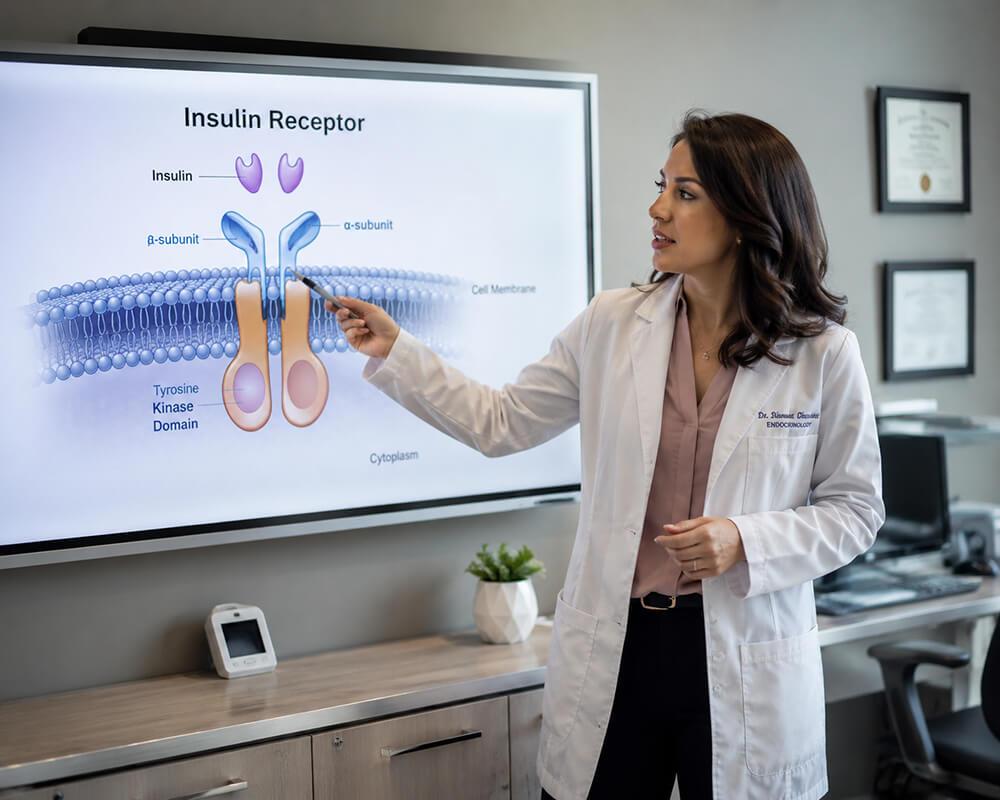
Insulin resistance occurs when your cells stop responding efficiently to insulin. This hormone normally shuttles glucose from your bloodstream into cells for energy. When cells resist this signal, your pancreas compensates by producing more insulin. This creates a cascade of hormonal disruption throughout the body.
According to DelveInsight (2024), insulin resistance prevalence in the United States has reached 29.5%. Globally, estimates vary depending on diagnostic criteria. Ballena-Caicedo et al. (2025) place worldwide prevalence at approximately 26.5%. Meanwhile, Expert Market Research (2025) reports that 54% of females show signs of insulin resistance. The disparity between these figures reflects the range of diagnostic tools used. However, the consistent takeaway is clear: the condition is far more common in women than general awareness suggests.
Women face unique hormonal interactions. These make them particularly susceptible to metabolic dysfunction. Reproductive hormones such as estrogen, progesterone, and testosterone influence how cells respond to insulin. This happens at different life stages, including puberty, the menstrual cycle, pregnancy, perimenopause, and post-menopause. Therefore, insulin resistance symptoms in women are rarely a standalone metabolic issue. They are often deeply intertwined with the broader hormonal landscape.
Recognizable Insulin Resistance Symptoms in Women to Watch For
Symptoms do not always look like high blood sugar. Many women spend years experiencing these signs without connecting them to metabolic dysfunction.
Physical warning signs:
- Unexplained weight gain, particularly around the abdomen, even without significant changes in diet or activity
- Persistent fatigue that rest does not relieve, often most pronounced after meals
- Skin changes, including dark, velvety patches (acanthosis nigricans) around the neck, armpits, or groin
- Skin tags appearing in areas of friction
- Increased hunger and cravings, especially for carbohydrates and sugar, shortly after eating
- Elevated blood pressure or triglyceride levels identified during routine labs
Reproductive and hormonal signs:
- Irregular or absent menstrual cycles, which are among the earliest indicators of insulin resistance symptoms in women, according to research cited by Expert Market Research (2025)
- Heavy or painful periods
- Difficulty conceiving
- Increased body or facial hair (hirsutism)
- Scalp hair thinning or loss
These symptoms can mimic thyroid dysfunction. Additionally, they resemble polycystic ovary syndrome (PCOS) or general hormonal decline. For this reason, a thorough evaluation is important rather than self-diagnosing based on any single sign.
The Hormonal Connection

The relationship between insulin and reproductive hormones runs in both directions. Elevated insulin levels stimulate the ovaries to produce excess androgens. This can disrupt ovulation and contribute to conditions like PCOS. A comparative cross-sectional study (2024) found that among women with PCOS, the prevalence of insulin resistance was 35.1%. However, some research places this range between 35% and 80% depending on the diagnostic criteria and population studied.
Among young adults aged 18 to 44, approximately 40% showed insulin resistance. This figure comes from US NHANES data, according to Freeman et al. (2023). This is a significant finding. It contradicts the common assumption that insulin resistance is primarily a condition of middle age or older adults.
Perimenopause and menopause introduce another layer of complexity. As estrogen declines, fat distribution shifts toward the abdomen. Insulin sensitivity decreases, and the risk of metabolic syndrome rises. Women who have previously managed their weight without much difficulty may notice that this becomes harder. This change happens even without behavioral shifts. Understanding hormone therapy before and after changes in body composition can be valuable context. This is especially true for women evaluating their hormonal health during this transition.
It is also worth noting that men experience their own set of hormonal-metabolic interactions. Reviewing low testosterone symptoms in men illustrates how closely hormonal decline and metabolic dysfunction track together across both sexes.
How Insulin Resistance Is Evaluated
There is no single standard diagnostic test. Physicians typically use a combination of the following:
| Test | What It Measures | Notes |
|---|---|---|
| Fasting glucose | Blood sugar after overnight fast | Elevated levels suggest impaired glucose regulation |
| Fasting insulin | Circulating insulin level | High insulin with normal glucose is a key early marker |
| HOMA-IR | Calculated ratio of glucose and insulin | Widely used research and clinical tool |
| HbA1c | 3-month average blood sugar | Useful for tracking long-term patterns |
| Lipid panel | Triglycerides, HDL | Low HDL and high triglycerides are associated findings |
| Sex hormone panel | Estrogen, testosterone, SHBG | Helps identify hormonal contributors |
A cross-sectional study published in ScienceDirect (2023) evaluated 401 young Japanese women. The researchers found that 8% had insulin resistance. Lifestyle factors such as sleep, dietary patterns, and physical activity emerged as significant associated variables. This study underscores the importance of evaluating context-specific factors. Rather than relying on a single threshold number, clinicians must assess the full picture.
At BioRestore Health, physician-led evaluations consider the full hormonal and metabolic picture. This approach is particularly relevant for women experiencing symptoms. These symptoms have been dismissed or attributed to stress, aging, or lifestyle alone.
Things to Know

- Insulin resistance can exist for years before blood sugar rises enough to qualify as prediabetes. Early symptom recognition is therefore critical.
- Acanthosis nigricans, the dark skin discoloration associated with elevated insulin, is not a cosmetic issue. It is a clinical marker worth discussing with your physician.
- Age-standardized prevalence of hyperinsulinemia in the US rose from 28.2% in 1999 to 41.4% in 2017-2018, according to NHANES data. This suggests the condition is becoming more prevalent over time.
- Some women with insulin resistance seek support for skin-related concerns before receiving any metabolic diagnosis. Treatments like microneedling for acne scars may address surface manifestations. However, resolving the underlying hormonal driver typically produces more lasting improvement.
- Reviewing microneedling before and after results can help set realistic expectations. This is especially true if you are considering aesthetic support alongside metabolic care.
Take the Next Step Toward Hormonal Clarity
If you recognize several of these symptoms, a physician-supervised evaluation is the most reliable path forward. Metabolic and hormonal imbalances respond well to early, targeted intervention. However, guessing based on symptoms alone is not sufficient to guide treatment.
Schedule a consultation with BioRestore Health to have your hormonal and metabolic markers evaluated by a clinician. We take a functional, root-cause approach. BioRestore Health, directed by Dr. Matthew Stanizzi, MD, serves patients in Connecticut, Massachusetts, New Jersey, and New York. In-person options are available at 32 Church Hill Road in Newtown, CT. Call 203-491-2999 to book your evaluation today.
Frequently Asked Questions
Q: What are the earliest insulin resistance symptoms in women to notice?
Irregular menstrual cycles, persistent fatigue after meals, and unexplained abdominal weight gain are often among the first signs.
These symptoms can appear years before blood sugar abnormalities show up on standard lab panels. Additionally, elevated fasting insulin is often a more sensitive early marker than fasting glucose. For this reason, requesting a full metabolic panel is worthwhile if you suspect an issue.
Q: Can insulin resistance cause hair loss in women?
Yes, elevated insulin can increase androgen production, which contributes to scalp hair thinning in women.
This is particularly common in women with PCOS. Elevated androgens driven partly by high insulin levels disrupt the hair growth cycle. Addressing the underlying metabolic condition often helps stabilize this symptom.
Q: Is insulin resistance the same as diabetes?
No, insulin resistance is a precursor condition, not diabetes itself.
In insulin resistance, blood sugar may still be within a normal range while insulin levels are already elevated. Without intervention, the condition progresses to prediabetes and type 2 diabetes. This is why early identification matters.
Q: How does menopause affect insulin resistance symptoms in women?
Declining estrogen levels during menopause reduce insulin sensitivity, making women more vulnerable to metabolic dysfunction during this transition.
Fat redistribution toward the abdomen during perimenopause also increases metabolic risk. For this reason, some women notice blood sugar and weight changes that seem disproportionate to their lifestyle during this period.
Q: Can insulin resistance be reversed in women?
In many cases, insulin sensitivity improves meaningfully through targeted lifestyle, nutritional, and hormonal interventions.
The degree of improvement depends on how long the condition has been present. Additionally, associated hormonal factors and individual physiology play roles. Physician-guided protocols tailored to your specific labs and symptoms tend to produce more consistent outcomes than generalized dietary advice alone.
Disclaimer: This article is intended for general educational purposes only and does not constitute medical advice, diagnosis, or treatment. Insulin resistance and related hormonal conditions are complex and require individualized evaluation by a qualified healthcare provider. Always consult a licensed physician before making changes to your treatment plan, medications, or health regimen.