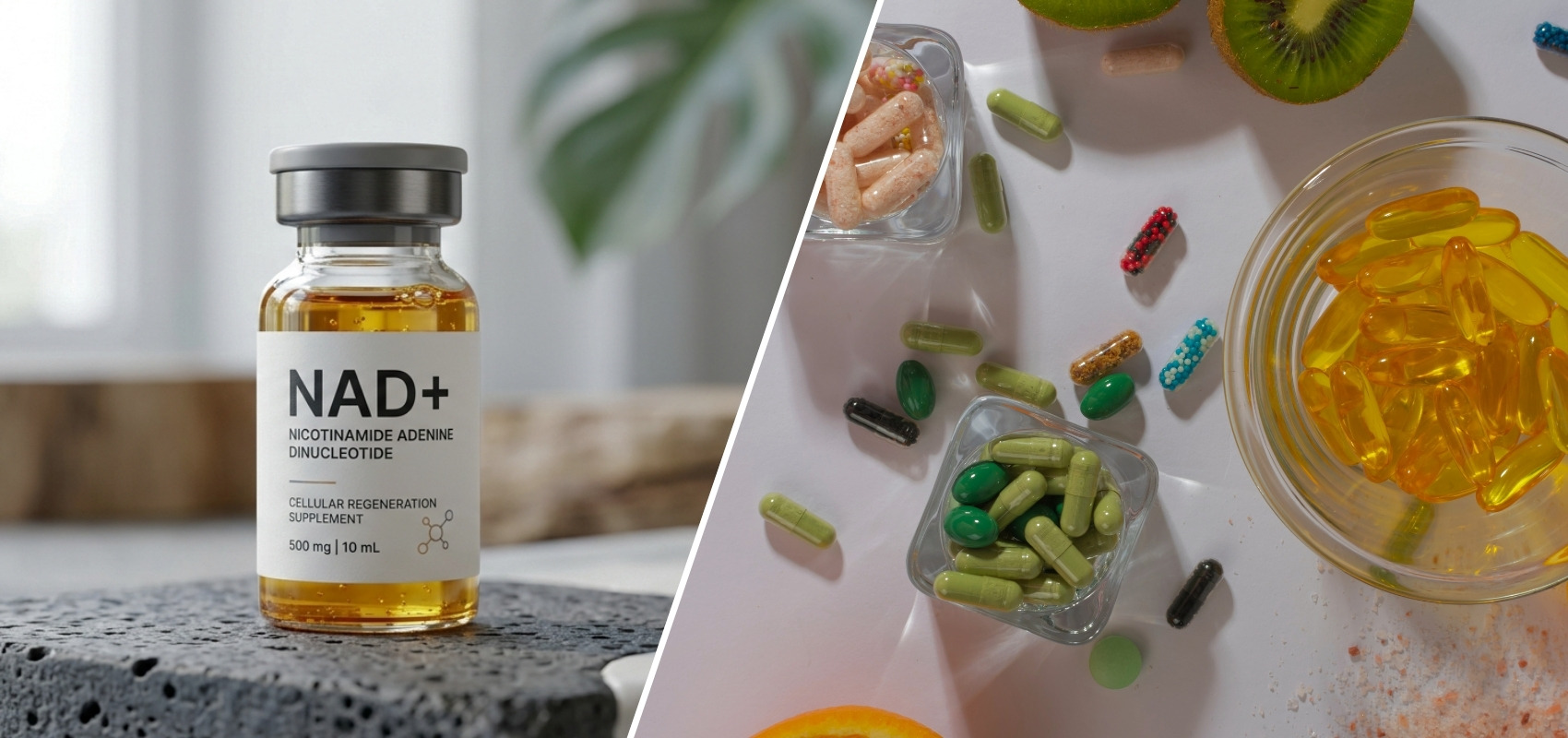
NAD+ helps your cells produce energy, which is why it has become a growing topic in wellness and longevity care. Today, the two most common ways people try to support NAD levels are through NAD+ IV therapy and oral supplements.
The main difference is simple: IV therapy delivers compounds directly into the bloodstream, while oral supplements must be digested and converted by the body.
Understanding how these two approaches differ can help patients make informed decisions when discussing NAD support strategies with a qualified healthcare provider.
What’s In This Guide
Quick Facts
- NAD+ supports cellular energy and metabolism.
- IV NAD+ enters the bloodstream directly.
- Oral supplements provide NAD precursors.
- These precursors can increase NAD biomarkers.
- Clinical benefits are still being studied.
How NAD+ IV Therapy Works

Direct Delivery Into the Bloodstream
During IV therapy, a medical provider administers NAD+ through a controlled infusion that typically lasts between one and several hours, depending on the protocol.
Once infused, NAD+ circulates through the bloodstream and becomes available for uptake by tissues and metabolic pathways involved in:
- Mitochondrial energy production
- Cellular repair processes
- Metabolic regulation
- Enzyme activity related to aging biology
Because the therapy bypasses digestion, it avoids what is known as first-pass metabolism, where substances are partially broken down in the liver and digestive tract before entering circulation.
What Happens to NAD+ After Infusion
Human pharmacokinetic research suggests that infused NAD+ does not simply accumulate in the bloodstream. Instead, the body rapidly processes it through metabolic pathways.
In a small clinical pilot study examining intravenous NAD+, researchers observed that:
- Plasma NAD+ levels did not significantly increase during the first two hours of infusion
- By the end of a six-hour infusion, plasma NAD+ rose by approximately 398 percent compared with baseline levels
- The delayed rise suggested rapid tissue uptake or metabolic conversion early in the infusion process
Why NAD+ Is Linked to Cellular Energy
NAD+ plays a central role in cellular metabolism because it helps shuttle electrons during biochemical reactions that produce ATP. ATP is the main energy currency used by cells.
Within mitochondria, NAD+ participates in reactions involved in:
- Oxidative metabolism
- Energy production
- Cellular stress response
- DNA repair pathways
Because of these roles, researchers are exploring NAD+ biology in fields such as aging research, metabolic health, and neurodegenerative disease.
How Oral NAD+ Supplements Work
NAD+ Precursors Used in Oral Supplements
The most widely studied oral compounds used to increase NAD availability include:
Nicotinamide Riboside (NR)
- A form of vitamin B3 that serves as a precursor to NAD.
- After absorption, NR is converted into NAD through enzymatic pathways in cells.
- NR supplementation can increase NAD levels in certain blood cells.
Nicotinamide Mononucleotide (NMN)
- Another NAD precursor that participates in the same metabolic pathway.
- NMN is converted into NAD once it enters cells.
- Research into NMN is expanding, particularly in metabolic health and aging biology.
Absorption and Conversion in the Body
When NAD precursors are taken orally, they pass through the digestive system and are absorbed in the small intestine. After absorption, the compounds enter circulation and are transported into tissues, where enzymes convert them into NAD.
Unlike IV NAD+, which delivers the coenzyme directly into the bloodstream, oral supplements rely on the body’s metabolic machinery to generate NAD within cells.
This indirect pathway may take longer to influence NAD levels compared with infusion, but it reflects how NAD is normally produced through diet and vitamin metabolism.
Why Oral Supplements Appeal To Many Patients
Oral NAD+ precursors are widely used because they are accessible and convenient compared with clinic-based therapies.
Common reasons people choose oral supplementation include:
- Daily support for metabolic pathways
- Convenience of home use
- Lower cost compared with IV therapy
- Growing scientific interest in NAD metabolism and aging biology
While results are promising in some areas, many potential benefits are still being evaluated through ongoing clinical trials.
Important Considerations for Supplement Use
Because oral NAD products are sold as dietary supplements, they are regulated differently from prescription medications.
The U.S. Food and Drug Administration states that dietary supplements are not approved to diagnose, treat, cure, or prevent diseases. Product quality, ingredient sourcing, and dosing can vary between manufacturers.
For this reason, clinicians often recommend:
- Choosing reputable brands with third-party testing
- Discussing supplements with a healthcare provider
- Considering supplements as part of a broader health strategy rather than a standalone solution
NAD+ IV vs Oral Supplements: Key Differences
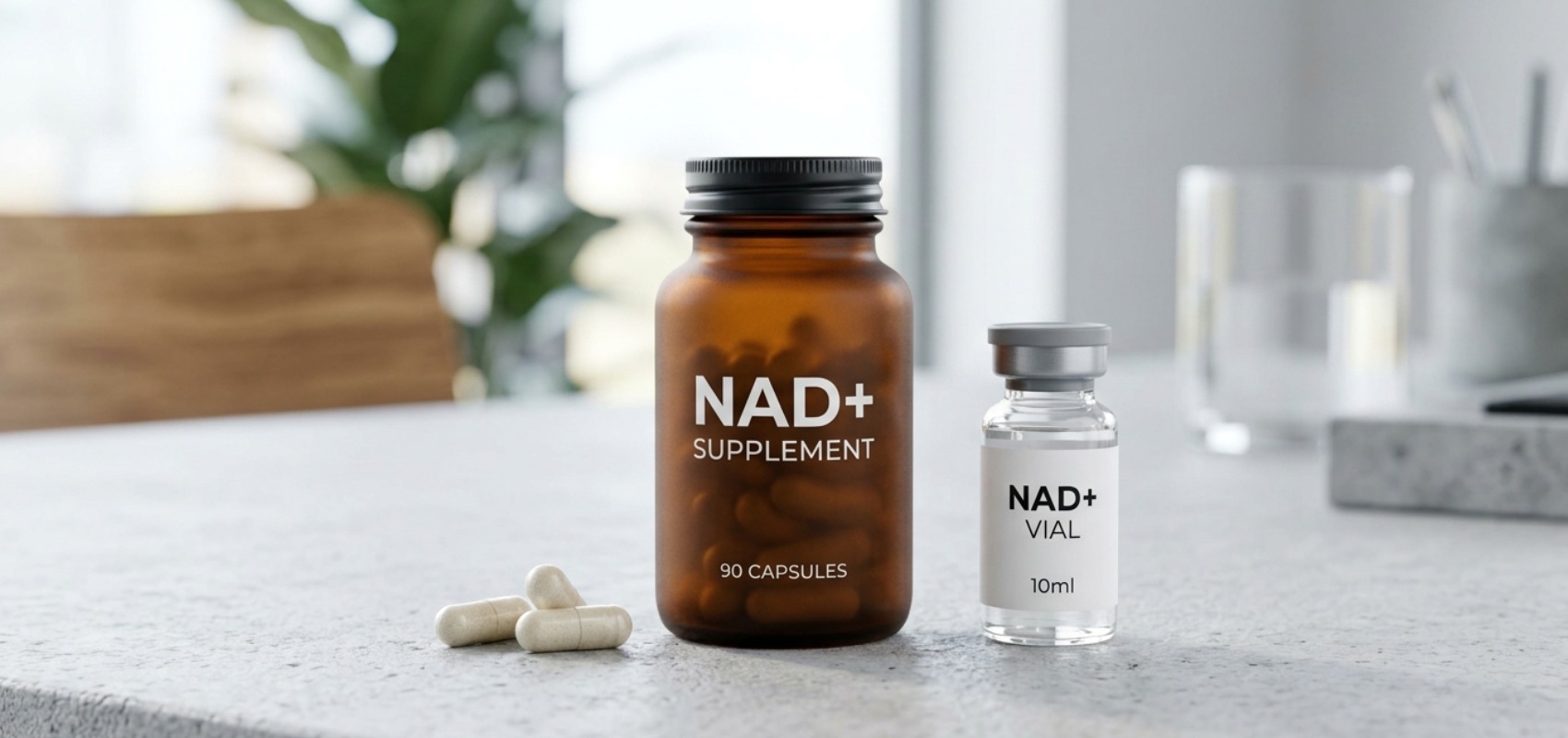
Both NAD+ IV therapy and oral NAD+ supplements aim to support the body’s NAD metabolism and cellular energy processes. However, they differ in how they are delivered, how the body processes them, and how much research currently exists for each approach.
|
Factor |
NAD+ IV Therapy |
Oral NAD+ Supplements |
|
Delivery Method |
Administered directly into the bloodstream through intravenous infusion under clinical supervision. |
Taken orally as capsules or tablets that pass through the digestive system. |
|
Active Compound |
Delivers NAD+ itself directly during infusion. |
Usually provides NAD+ precursors such as nicotinamide riboside (NR) or nicotinamide mononucleotide (NMN), which the body converts into NAD+. |
|
Absorption Pathway |
Bypasses digestion and first-pass metabolism in the liver. NAD+ enters circulation immediately during infusion. |
Absorbed through the digestive tract and converted through metabolic pathways before becoming NAD inside cells. |
|
Biological Processing |
Research suggests infused NAD+ may be rapidly metabolized or taken up by tissues, meaning plasma levels can fluctuate during infusion. |
Precursor compounds enter the NAD salvage pathway, where enzymes convert them into NAD within cells. |
|
Convenience |
Requires clinic visits and infusion sessions that may last one to several hours. |
Easy daily use at home with minimal time commitment. |
|
Cost Considerations |
Typically more expensive due to clinical administration and monitoring. |
Generally lower cost and more widely accessible. |
|
Medical Supervision |
Usually administered under supervision by trained healthcare professionals. |
Available over the counter as dietary supplements, though medical guidance is still recommended. |
|
Tolerance and Side Effects |
Some patients report temporary symptoms during infusion, such as nausea, chest pressure, or flushing, depending on the infusion rate. |
Generally well tolerated in clinical trials, though digestive discomfort may occur in some individuals. |
Who May Prefer NAD+ IV Therapy
Individuals Seeking Clinician-Supervised Treatment
IV therapy is delivered by trained medical professionals, which allows for:
- Individualized dosing protocols
- Screening for medical conditions or medication interactions
- Monitoring during the infusion process
This level of supervision may appeal to individuals who prefer therapies that are administered and monitored by healthcare providers.
Individuals Who Prefer Direct Infusion Delivery
Because IV therapy delivers NAD+ directly into the bloodstream, some patients are interested in this route for its immediate systemic delivery.
However, research shows that NAD metabolism is complex and tightly regulated. Infused NAD+ may be rapidly processed or taken up by tissues rather than simply accumulating in the bloodstream.
Who May Prefer Oral NAD+ Supplements

People Seeking a Convenient Daily Option
Oral supplements can be taken at home without the need for clinic visits.
For many individuals, this approach may be preferable because it:
- Requires only a few seconds each day
- Avoids infusion procedures
- Fits easily into existing supplement routines
Because oral precursors are absorbed through the digestive system, they rely on metabolic conversion pathways to produce NAD within cells.
Individuals Looking for Lower Cost Options
Compared with IV therapy, oral supplements are generally more affordable and widely available.
However, quality can vary across manufacturers. Healthcare providers often recommend selecting supplements that undergo independent testing to verify purity and ingredient accuracy.
Safety, Screening, and Medical Oversight
Medical Screening Before Starting NAD Therapy
Healthcare providers often conduct a clinical evaluation before recommending NAD+ IV therapy or long-term supplementation. Screening may include:
- Review of current medications
- Medical history and chronic conditions
- Metabolic or cardiovascular risk factors
- Liver and kidney function
- Pregnancy or breastfeeding status
These assessments help identify potential risks, interactions, or contraindications. For example, individuals with complex medical conditions or those taking multiple medications may require additional monitoring when introducing new supplements or infusion therapies.
Monitoring During NAD+ IV Therapy
Because NAD+ IV therapy is administered through infusion, it is typically performed under clinical supervision. Medical providers monitor patients during treatment to observe tolerance and adjust infusion rates if needed.
Some individuals may experience temporary infusion-related symptoms such as:
- Nausea
- Flushing
- Chest pressure
- Increased heart rate
Clinical monitoring helps providers manage these reactions and ensure that treatment protocols remain appropriate for the patient.
Why Clinical Guidance Matters
NAD metabolism interacts with numerous biological systems, including mitochondrial function, metabolic regulation, and cellular stress responses. Because these systems vary significantly between individuals, responses to NAD-related therapies may also vary.
Healthcare professionals can help determine:
- Whether NAD support may be appropriate for a specific patient
- Which delivery method may fit a person’s goals and health history
- How to monitor response and adjust protocols if necessary
As research continues to evolve, many experts emphasize that NAD therapies should be considered part of a broader health strategy rather than a standalone solution.
Frequently Asked Questions (FAQs)
How quickly do NAD+ levels change after IV therapy?
IV NAD+ infusion can raise circulating NAD levels during treatment because the compound enters the bloodstream directly. However, research suggests the body rapidly processes infused NAD+, and levels may fluctuate during infusion as tissues absorb or metabolize it. The speed and magnitude of change can vary between individuals and infusion protocols.
Do NAD+ supplements work the same as vitamin B3 supplements?
Not exactly. Some NAD+ supplements contain specialized forms of vitamin B3, such as nicotinamide riboside (NR) or nicotinamide mononucleotide (NMN), which participate in NAD metabolic pathways. While these compounds are related to vitamin B3 metabolism, they follow more specific biochemical pathways involved in cellular NAD production.
Can NAD+ therapy support healthy aging?
Researchers are studying NAD metabolism because NAD levels tend to decline with age. Early research suggests NAD pathways may play a role in mitochondrial health, metabolic regulation, and cellular repair. However, many applications related to aging are still under investigation, and more long-term human studies are needed.
How often do people receive NAD+ IV therapy?
Treatment frequency varies depending on the protocol and clinical guidance. Some individuals receive occasional infusions as part of a medically supervised wellness program, while others may pursue periodic treatments based on physician recommendations. There is currently no universal schedule supported by large-scale clinical trials.
Are NAD+ supplements safe for long-term use?
Human studies on NAD precursors such as nicotinamide riboside suggest they are generally well-tolerated at studied doses. However, long term safety data are still developing, and individuals with medical conditions or medications should consult a healthcare professional before long term supplementation.
Bottom Line
NAD+ IV therapy and oral NAD+ supplements both aim to support cellular energy, but they differ in delivery, convenience, and research depth. IV therapy is clinician-administered, while oral supplements rely on precursor compounds the body converts into NAD. Results can vary, and research is still evolving. To explore medically supervised wellness support, contact BioRestore.
Disclaimer:
This content is for informational purposes only and is not medical advice. NAD+ therapies and supplements are not guaranteed, are not a substitute for standard medical care, and should be discussed with a qualified healthcare provider. Results vary based on the individual and clinical context. For more information about medically supervised wellness options, contact BioRestore.
Sources:
Canto C. (2022). NAD+ Precursors: A Questionable Redundancy. Metabolites, 12(7), 630. https://doi.org/10.3390/metabo12070630
Grant, R., Berg, J., Mestayer, R., Braidy, N., Bennett, J., Broom, S., & Watson, J. (2019). A pilot study investigating changes in the human plasma and urine NAD+ metabolome during a 6 hour intravenous infusion of NAD+. Frontiers in Aging Neuroscience, 11, Article 257. https://doi.org/10.3389/fnagi.2019.00257
Mishra, K., & Kakhlon, O. (2025). The crucial role of NAD+ in mitochondrial metabolic regulation. Biocell, 49(7), 1101–1123. https://doi.org/10.32604/biocell.2025.061725
Zhang, H., Ryu, D., Wu, Y., Gariani, K., Wang, X., Luan, P., D’Amico, D., Ropelle, E. R., Lutolf, M. P., & Auwerx, J. (2016). NAD+ repletion improves mitochondrial and stem cell function and enhances life span in mice. Science, 352(6292), 1436–1443. https://doi.org/10.1126/science.aaf2693
Biţă, A., Scorei, I. R., Ciocîlteu, M. V., Nicolaescu, O. E., Pîrvu, A. S., Bejenaru, L. E., Rău, G., Bejenaru, C., Radu, A., Neamţu, J., Mogoşanu, G. D., & Benner, S. A. (2023). Nicotinamide Riboside, a Promising Vitamin B3 Derivative for Healthy Aging and Longevity: Current Research and Perspectives. Molecules (Basel, Switzerland), 28(16), 6078. https://doi.org/10.3390/molecules28166078
Freeberg, K. A., Udovich, C. C., Martens, C. R., Seals, D. R., & Craighead, D. H. (2023). Dietary Supplementation With NAD+-Boosting Compounds in Humans: Current Knowledge and Future Directions. The journals of gerontology. Series A, Biological sciences and medical sciences, 78(12), 2435–2448. https://doi.org/10.1093/gerona/glad106
Song, Q., Zhou, X., Xu, K., Liu, S., Zhu, X., & Yang, J. (2023). The safety and antiaging effects of nicotinamide mononucleotide in human clinical trials: An update. Advances in Nutrition, 14(6), 1416–1435. https://doi.org/10.1016/j.advnut.2023.08.008
U.S. Food and Drug Administration. (2022, June 2). FDA 101: Dietary supplements. https://www.fda.gov/consumers/consumer-updates/fda-101-dietary-supplements