This article is educational. BioRestore Health offers consultations related to regenerative medicine services, and this page may be used to inform patients considering an appointment. Claims are not guarantees of results.
Quick Facts
- Exosome injections are an experimental form of regenerative support discussed in stem-cell-related research and are not a replacement for standard sports medicine care.
- Early research suggests exosomes are being studied for whether they may help modulate inflammation and may be associated with repair pathways in preclinical models, but results vary and are not guaranteed.
- Product quality, sourcing, processing standards, and clinical oversight are important safety considerations.
- Athletes subject to drug testing should be mindful of anti-doping rules and ensure treatments align with compliance requirements.
- Exosome-based approaches may involve multiple applications and are typically considered part of a broader, medically supervised rehabilitation plan.
What's In This Guide
Exosome injections use small extracellular vesicles that are being studied for their potential role in cell signaling related to inflammation and tissue repair. Evidence in sports injuries is still developing, outcomes vary, and exosomes are not a replacement for standard sports medicine care.
This article is educational and does not replace medical advice, diagnosis, or treatment.
What is Exosomes Injection?
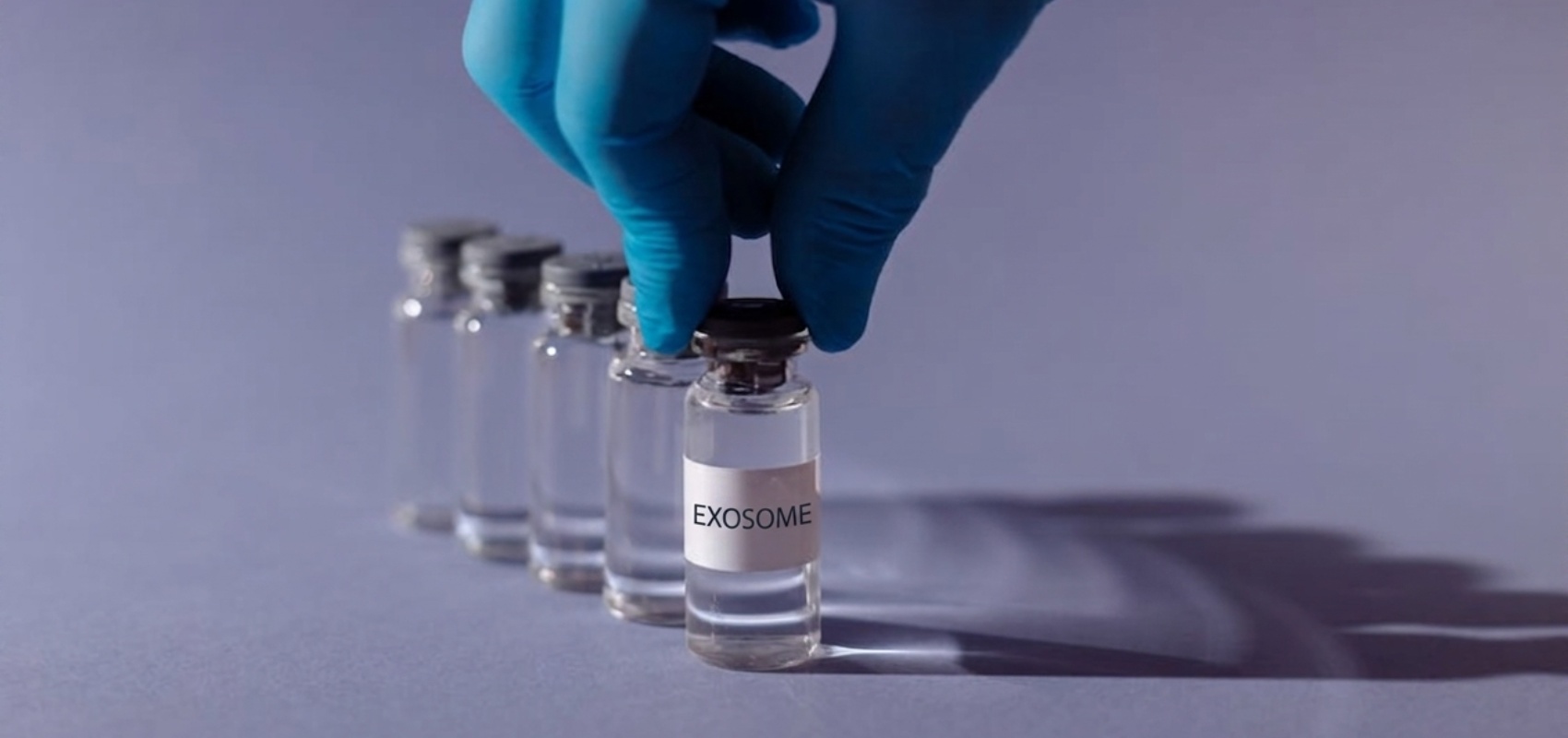
Exosomes injection is a development in medical treatments, particularly relevant for athletes dealing with sports injuries. Exosomes are small vesicles involved in cellular communication and are being studied for their role in signaling related to inflammation and tissue repair. This approach has gained attention in sports medicine because it is minimally invasive and is being studied for whether it may support recovery in selected cases. Evidence is still developing, and outcomes vary.
What Athletes Need to Know Before Considering Exosomes
Exosome-based treatments are experimental, supported mainly by early research, and often not covered by insurance. Commonly discussed in stem-cell-related research, exosomes may be considered a form of regenerative support in selected patients, but results vary, and careful medical oversight is essential.
Regulatory Status and What Patients Should Know
Exosome-based products are not standardized across clinics, and product sourcing, processing, and quality controls can vary widely. In many settings, exosome products are marketed as regenerative support even though clinical evidence and regulatory status may differ by product type and intended use. Patients should ask clear questions about what is being administered, how it is tested, and what safety documentation exists.
What “exosome product” can mean in practice
Clinics may use different product categories and preparation methods. This can affect sterility controls, content consistency, and overall risk. Because labeling and protocols vary, patients should request documentation rather than relying on marketing descriptions.
How to verify safety and quality (what to ask for)
Ask the provider for:
- Certificate of Analysis (COA) for the specific batch (if available)
- Sterility/endotoxin testing, and where testing was performed
- Donor screening standards (if donor-derived)
- Chain-of-custody / handling documentation
- Storage and transport conditions
- Exact contents (what’s in the vial, and what’s not)
- Clinician qualifications and who performs the injection
- Informed consent that clearly states experimental status, alternatives, and known/unknown risks
Experimental Status and Current Evidence
Exosome injections are still being studied, and much of the available data comes from early clinical research and ongoing trials. While preliminary findings suggest potential benefits in selected patients, there is not yet enough high-quality evidence to establish standardized protocols, ideal dosing, or long-term outcomes.
Product Sourcing, Processing, and Quality Controls
The source and handling of exosome products can vary significantly. Treatments should involve clear documentation, appropriate processing standards, and sterile technique, with strong clinical oversight to reduce avoidable risks.
Anti-Doping Compliance and TUE Considerations
Athletes subject to drug testing should confirm that any regenerative therapy complies with anti-doping rules. Product contents should be reviewed carefully, and a sports medicine physician can help determine whether a Therapeutic Use Exemption may be needed.
Possible Side Effects and Procedural Risks
Even though exosomes are acellular and contain no living cells, side effects can still occur. Risks depend on individual health factors, injection site, and technique.
- Temporary pain, swelling, or soreness
- Infection or nerve irritation risks
- Scarring or injection-site complications
Treatment Course and Expectations
Response to exosome therapy varies, and improvement is not guaranteed. Some individuals may experience changes after a single application, while others may require more than one treatment as part of a broader, medically supervised rehabilitation and regenerative support plan.
- Results differ by injury and individual
- Multiple applications may be considered in some cases
- Best used alongside rehab and standard sports medicine care

Where Exosomes Are Being Studied in Sports Injuries
Exosome-based approaches are being studied in sports medicine for a range of injury contexts. The evidence base varies by condition, and many findings come from preclinical or early clinical research rather than large controlled trials.
Below are six injury areas where exosomes are being studied. The evidence strength and applicability to athletes vary.
1. Muscle Injury
Research suggests exosomes may support muscle recovery by influencing muscle cell repair, reducing damaging inflammation, and limiting scar-like tissue changes. Most evidence is from lab and animal studies, with limited human sports data so far.
Evidence Snapshot
- Evidence type: Mostly preclinical (lab/animal), with limited human sports-injury data
- Evidence strength: Low
- Who this applies to: Findings mainly come from research models of muscle damage and repair, not necessarily competitive athletes with real-world return-to-play timelines
- What we still don’t know: Best dose, timing, number of treatments, long-term safety, and how outcomes compare vs physical therapy, PRP, standard rehab, or natural recovery
2. Frozen Shoulder and Shoulder Stiffness
Exosomes are being studied for their potential to reduce inflammation and fibrosis that contribute to capsular thickening and loss of motion. Evidence is mostly preclinical and still developing.
Evidence Snapshot
- Evidence type: Primarily preclinical (lab/animal) with early translational discussion; limited high-quality human trials specific to frozen shoulder
- Evidence strength: Low
- Who this applies to: Research relevance is more general to inflammation/fibrosis signaling models, not clearly established for typical frozen shoulder patients (diabetic, post-immobilization, etc)
- What we still don’t know: Whether it improves range of motion, reduces time to recovery, lowers recurrence, and how it compares to physical therapy, corticosteroid injections, hydrodilatation, or surgical options
3. Tendon Injury
Tendon and ligament injuries are among the most common problems in sports, often cited as making up around 30 to 40% of all sports injuries. In research models, exosomes are being explored for their potential to support tendon healing by influencing inflammation, nudging immune activity toward repair, and supporting extracellular matrix remodeling.
Some studies also suggest exosomes may reduce inflammatory signaling by lowering certain pro-inflammatory mediators and cytokines, which could support a more favorable environment for tendon repair. This is especially relevant for injuries like the Achilles tendon and rotator cuff, but real-world clinical outcomes are still uncertain and continue to be studied.
Evidence Snapshot
- Evidence type: Mix of preclinical (lab/animal) plus some early human clinical reporting in related tendon conditions, but not standardized across products or protocols
- Evidence strength: Low to Moderate (leans low without consistent controlled human trials)
- Who this applies to: Most supportive evidence maps to tendon biology and inflammation signaling; real-world outcomes for common athlete tendon issues (Achilles, patellar, rotator cuff tendinopathy) remain uncertain
- What we still don’t know: Best candidate selection, interaction with loading/rehab, durability of outcomes, and comparative effectiveness vs eccentric loading programs, shockwave, PRP, or surgery when indicated
4. Tendon-Bone Healing
After procedures like ACL reconstruction, exosomes may support tendon-to-bone integration by reducing excessive inflammation and promoting a more regenerative healing-related environment. Current support is mainly from animal models.
Evidence Snapshot
- Evidence type: Largely animal studies (example: post-operative tendon-to-bone models such as ACL reconstruction analogs)
- Evidence strength: Low
- Who this applies to: Primarily post-surgical models; not directly equivalent to human ACL reconstruction recovery or return-to-sport protocols
- What we still don’t know: Human translation (does it improve graft integration, reduce re-tear risk, improve functional scores), optimal timing relative to surgery, and comparison vs standard surgical + rehab pathways
5. Arthritis and Joint Inflammation
Research suggests exosomes may have potential in arthritis by helping calm inflammation and supporting joint tissues, which could be relevant for conditions like osteoarthritis and rheumatoid arthritis. Some studies suggest they may influence immune activity, including signals linked to inflammatory immune cells.
Exosomes are also being studied as “carriers” because they can transport biological signals (like proteins and genetic material) between cells. In rheumatoid arthritis research, this cell-to-cell messaging may play a role in how inflammation spreads or is regulated. Most of this evidence is still emerging, and many findings come from lab or animal studies rather than large human trials.
Evidence Snapshot
- Evidence type: Combination of preclinical research and early clinical discussion; for many arthritis claims, evidence varies by condition (osteoarthritis vs inflammatory arthritis)
- Evidence strength: Low (may be moderate in limited contexts, but only when supported by controlled human data, which is still sparse)
- Who this applies to: Often studied in contexts like osteoarthritis models or immune signaling studies, not necessarily athletes with acute sports injuries
- What we still don’t know: Whether symptom relief is consistent, how long effects last, risks across populations, and comparison vs established arthritis treatments (PT, weight management, NSAIDs when appropriate, corticosteroid/hyaluronic acid injections, surgery).
6. Cartilage Injury
Studies suggest exosomes may be associated with repair pathways in preclinical models by promoting chondrocyte survival, improving matrix production, and reducing inflammatory cytokines. Most data is preclinical, and outcomes may vary.
Evidence Snapshot
- Evidence type: Predominantly preclinical (lab/animal) focused on cartilage signaling and chondrocyte survival; limited direct human outcomes for focal cartilage injuries
- Evidence strength: Low
- Who this applies to: Research often reflects cartilage biology models, which may not translate to athletes with focal defects, post-surgical cartilage repair, or degenerative cartilage loss
- What we still don’t know: Whether it meaningfully improves cartilage structure, pain/function outcomes, long-term joint health, and comparison vs microfracture, MACI, osteochondral grafting, PRP, or structured rehab
Note: Evidence strength reflects the overall state of published research and may vary by specific product, protocol, and injury severity.

Exosomes in Athletic Performance
Researchers are studying exosomes to better understand how the body adapts to exercise and training. These small cell messengers may influence metabolism, recovery, and inflammation, but their role in athletic performance is still being explored.
1. Metabolic Regulation
Exosomes are small particles that help cells communicate with each other. During exercise, especially endurance activity, the body releases more exosomes into the bloodstream. These exosomes carry bioactive signals that are being studied for whether they may help coordinate how muscles and other tissues manage energy use and metabolism.
2. Anti-Fatigue and Antioxidant Support
Some studies suggest exosomes may help cells cope with physical stress by supporting energy production and limiting exercise-related fatigue. They may influence how mitochondria function and how efficiently cells produce energy. Exosomes have also been shown, in research settings, to carry antioxidant-related molecules that help reduce oxidative stress caused by intense exercise.
3. Athletic Recovery and Performance
Exosomes are being studied for their role in muscle repair after intense training. Exercise can cause small amounts of muscle damage, and exosomes are being studied for whether they may help deliver signals that support tissue repair and recovery. Research also suggests they may influence endurance by supporting energy pathways and reducing excessive inflammation after workouts. While these findings are promising, they do not mean exosomes directly enhance performance, and human data is still limited.
Frequently Asked Questions
Are exosome injections FDA-approved for sports injuries?
Exosome-based approaches for sports injuries are generally considered investigational, and approval status depends on the specific product and intended use. Patients should ask the clinic to explain the exact product used and its regulatory status.
What are realistic expectations for results?
Outcomes vary widely. Some people report symptom changes over weeks, others notice no meaningful improvement. Injury type, rehab adherence, and overall health all matter. No outcome is guaranteed.
What are common short-term side effects?
Temporary soreness, swelling, bruising, and stiffness can occur after injections. Risk also depends on the injection technique and the body area treated.
When should I seek urgent care after an injection?
Seek urgent medical evaluation if you develop:
- Fever or chills
- Worsening redness, warmth, or rapidly increasing swelling
- Severe or escalating pain that doesn’t improve
- Drainage from the injection site
- Numbness/weakness, or new neurological symptoms
What should I avoid after treatment?
Follow your clinician’s instructions. Many protocols recommend avoiding high-impact training and heavy loading of the area for a short period. Rehab is usually gradual and individualized.
How does this compare to PRP?
PRP has broader clinical use and more established protocols. Exosome-based approaches are newer and less standardized. The best option depends on the injury, evidence base, and clinician’s rationale.
Final Thoughts
For sports injuries, regenerative support options may be considered alongside standard sports medicine care and rehabilitation, with results varying by individual. BioRestore in Newtown, CT, focuses on alternative regenerative medicine with appropriate screening and clinical monitoring, and provides education on stem-cell-related topics. For an evaluation in Newtown, CT, contact BioRestore in Newtown, CT to schedule a consultation.
DISCLAIMER:
This information is for education only and is not medical advice. Outcomes vary by individual, injury type, and overall health, and no results are guaranteed. Always consult a licensed physician to determine what’s appropriate for your condition and sport.
SOURCES:
Goren, A., Shapiro, J., Dhurat, R., McCoy, J., & Lotti, T. (2024). Examining the uncertainties surrounding exosome therapy in androgenetic alopecia: A call for evidence-based practice. Journal of Drugs in Dermatology, 23(2), e86–e92. https://jddonline.com/articles/examining-the-uncertainties-surrounding-exosome-therapy-in-androgenetic-alopecia-a-call-for-evidence-based-practice
Huang, H., Chen, P., Feng, X., Qian, Y., Peng, Z., Zhang, T., & Wang, Q. (2024). Translational studies of exosomes in sports medicine – a mini-review. Frontiers in immunology, 14, 1339669. https://doi.org/10.3389/fimmu.2023.1339669
Kalluri, R., & LeBleu, V. S. (2020). The biology, function, and biomedical applications of exosomes. Science (New York, N.Y.), 367(6478), eaau6977. https://doi.org/10.1126/science.aau6977
Li, Z., Li, Q., Tong, K., Zhu, J., Wang, H., Chen, B., & Chen, L. (2022). BMSC-derived exosomes promote tendon-bone healing after anterior cruciate ligament reconstruction by regulating M1/M2 macrophage polarization in rats. Stem Cell Research & Therapy, 13, Article 295. https://doi.org/10.1186/s13287-022-02975-0
Suh, J. H., Joo, H. S., Hong, E. B., Lee, H. J., & Lee, J. M. (2021). Therapeutic Application of Exosomes in Inflammatory Diseases. International journal of molecular sciences, 22(3), 1144. https://doi.org/10.3390/ijms22031144
Park K. Y. (2025). Adverse Reactions Following Intradermal Injection of Exosome-Based Formulations: A Case Series. Journal of cosmetic dermatology, 24(10), e70520. https://doi.org/10.1111/jocd.70520
Wan, R., Hussain, A., Behfar, A., Moran, S. L., & Zhao, C. (2022). The Therapeutic Potential of Exosomes in Soft Tissue Repair and Regeneration. International journal of molecular sciences, 23(7), 3869. https://doi.org/10.3390/ijms23073869
World Anti-Doping Agency. (n.d.). Therapeutic use exemptions (TUEs). https://www.wada-ama.org/en/athletes-support-personnel/therapeutic-use-exemptions-tues
Xue, Y., Riva, N., Zhao, L., Shieh, J.-S., Chin, Y.-T., Gatt, A., & Guo, J. J. (2023). Recent advances of exosomes in soft tissue injuries in sports medicine: A critical review on biological and biomaterial applications. Journal of Controlled Release, 364, 90–108. https://doi.org/10.1016/j.jconrel.2023.10.031