Key Takeaways✔ True stem cell therapy is highly regulated, largely investigational, and not widely available in Connecticut.✔ Patients should ask detailed safety, evidence, and oversight questions before considering any regenerative treatment. ✔ Many advertised “stem cell” services—especially IV infusions—do not contain actual stem cells. ✔ Alternatives like physical therapy, standard medical care, and regenerative support can be safer, accessible options. ✔ Alternative regenerative medicine may offer supportive, physician-guided options for individuals seeking non-stem-cell wellness approaches. |
Who Is a Good Candidate for Stem Cell Therapy?
Many people in Connecticut want to understand who might qualify for legitimate, research-based stem cell options—especially when searching for stem cell therapy in CT.
In regulated clinical environments, candidates are carefully selected based on safety, overall health, and the specific condition being studied. Doctors emphasize that not everyone is eligible, and no outcome is guaranteed.
Typical Characteristics of a Potential Candidate
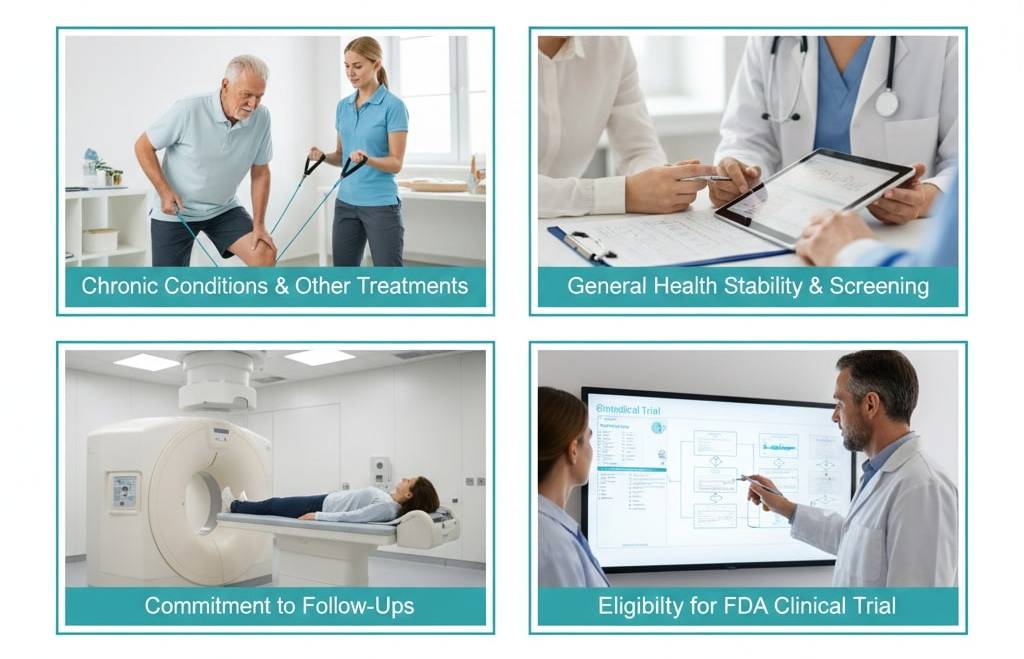
Chronic or Persistent Conditions
Individuals whose symptoms have not responded well to standard treatments—such as physical therapy, medication, or lifestyle changes—may be evaluated for investigational stem cell trials.
General Health Stability
Candidates must meet specific age, cardiovascular, metabolic, or immune-health criteria. Researchers prioritize patients healthy enough to handle procedures safely.
Ability to Commit to Follow-Ups
FDA-regulated studies require ongoing check-ins, imaging, bloodwork, or monitoring. Patients must be willing and able to participate in these assessments.
Eligibility for an FDA-Regulated Clinical Trial
True stem cell therapy outside of blood-related conditions is typically only available within registered clinical trials. This ensures patient protections, oversight, and transparent protocols.
Realistic Expectations
Patients must understand that results vary widely, and investigational therapies cannot offer guaranteed improvements or permanent changes. Responsible clinicians will emphasize this upfront.
Why Screening Is Essential
Before anyone is accepted into a trial for stem cell therapy in Connecticut, researchers conduct detailed screening to evaluate:
- Overall medical history
- Risk factors and contraindications
- Specific condition severity
- Patient goals and fit within study criteria
Key Questions for Patients
Safety and Regulation
Before moving forward with any regenerative or stem cell–related service, patients should clearly understand the legal status, clinical oversight, and safety measures involved. These questions help you identify responsible, evidence-based providers.
Is This Therapy Approved by the FDA?
If a clinic claims or implies approval but cannot provide the official reference, the treatment is not FDA-approved. This is especially important when researching stem cell therapy in CT, where various practices may advertise unapproved products.
Am I Part of an FDA-Regulated Clinical Trial?
For true stem cell therapy (outside of hematologic conditions), legitimate treatment usually occurs only inside a registered clinical trial. Look for:
- A clinical trial ID number
- A written study protocol
- Institutional oversight or IRB documentation
- Defined safety and reporting procedures
What Are the Specific Risks and Potential Side Effects, Both Immediate and Long-Term?
No regenerative treatment is risk-free—especially investigational ones. A reputable provider should clearly explain:
- Immediate risks: infection, bleeding, injection-site reactions
- Systemic risks: immune response, inflammation, allergic reactions
- Long-term risks: unknown outcomes often associated with early research
Who Is the Doctor in Charge and What Is Their Specialized Training?
This question is crucial for people exploring clinics promoting stem cell therapy in Connecticut, where the “doctor” may not actually be present or credentialed Patients should ask:
- Is the clinician board-certified?
- Do they have specialized training in regenerative medicine or sports medicine?
- Will they personally supervise the procedure and follow-ups?
Is the Clinic Prepared for Emergencies and Who Is the Contact Person in an Emergency?
All reputable clinics will have:
- Emergency equipment
- A documented rapid-response protocol
- A clear point of contact in case of complications
- Staff trained in recognizing adverse events
Evidence and Procedure Details
If you’re researching stem cell therapy in CT, it’s important to understand the science behind what’s being offered. Responsible providers should be able to answer these questions clearly and with evidence—not vague promises.
What Is the Scientific Evidence That This “Treatment” Is Effective for My Specific Condition?
FDA-approved stem cell products are limited to specific blood disorders and can be found on the FDA’s official list. Ask for:
- Peer-reviewed studies published in reputable medical journals
- Clinical trial data specific to your condition
- Realistic expectations, not dramatic before-and-after claims
- Evidence-based comparisons to standard care
Where Do the Stem Cells Come From, and How Are They Identified, Isolated, and Grown?
The source of stem cells determines safety and legality. Ask the clinic to detail:
- Origin: Autologous (your own cells), donor, or umbilical products
- Processing: How the cells are extracted, purified, or cultured
- Verification: How the clinic confirms the cells are viable and correctly identified
- Chain of custody: Documentation showing the cells were handled safely
How Will the Cells Be Delivered to My Body?
Delivery method affects both risk and effectiveness. Providers should explain:
- Whether delivery is local (injection) or systemic (IV infusion)
- Why that method is chosen
- What risks are associated with each approach
- What monitoring will occur after the procedure
What Are the Expected Benefits, How Will They Be Measured, and How Long Will It Take to See Results?
Patients should expect a realistic, research-based explanation—not guaranteed timelines. Ask the provider to walk you through:
- Possible outcomes based on clinical data
- How progress will be measured—pain scores, function tests, imaging, etc.
- What a successful response looks like versus a partial or no response
- Expected variability (every patient responds differently)
Alternatives
Many people who search for stem cell therapy in Connecticut eventually find that alternatives may fit their needs better—especially when supported by strong evidence and medical supervision. These options are often more accessible, better researched, and appropriate as part of a broader treatment plan.
Physical Therapy and Rehabilitation
Often the first recommended intervention:
- Helps restore strength and mobility
- Supported by decades of research
- May reduce the need for more invasive options
Medications or Other Standard Care Treatments
These can help manage inflammation, pain, or progressive symptoms:
- Non-steroidal anti-inflammatory drugs (NSAIDs)
- Corticosteroid injections
- Disease-specific medications
- Physician-guided treatment plans
Surgery
In more severe cases, surgery remains an evidence-backed choice:
- May address structural issues that regenerative treatments cannot
- Often recommended when conservative care fails
- Can provide long-term functional improvements
How Long Does Stem Cell Therapy Last?
Even in FDA-regulated trials, responses vary widely, and some patients may not experience noticeable improvement at all. Any clinic promising guaranteed timelines—particularly those marketing stem cell IV therapy near me—should be approached with caution.
While early studies offer clues, there is no universal timeline. Several key factors shape how long any regenerative effect might last:
- Patient Age: Younger individuals often have stronger baseline healing potential, which may influence response duration.
- Overall Health and Lifestyle: Conditions like diabetes, autoimmune disorders, or smoking can affect how the body responds to regenerative therapies.
- Nature and Severity of the Condition: Mild or moderate issues may respond differently than severe or long-standing injuries.
- Type and Source of Stem Cells: Autologous, donor-derived, and umbilical sources carry different mechanisms—and different levels of scientific support.
- Delivery Method: Injection, surgical placement, and IV infusion each create different levels of local and systemic impact.
- Individual Biological Response: Genetics, inflammation levels, and immune activity vary widely from person to person.

What Are Some Challenges in Stem Cell Research?
Even though public interest in stem cell therapy in Connecticut and nationwide continues to grow, researchers face several complex challenges that prevent stem cell treatments from becoming widely available.
- Ethical and Regulatory Concerns: Decisions around certain cell sources, consent, and tissue handling require strict oversight, slowing widespread adoption.
- Standardizing Cell Sourcing and Processing: Stem cells collected from different donors or processed in different labs don’t behave the same way. This inconsistency makes it difficult to produce predictable results.
- Preventing Contamination and Ensuring Sterility: Stem cells must be handled in controlled environments to avoid bacterial, viral, or fungal contamination—something not all clinics advertising stem cell therapy in CT can guarantee.
- Ensuring Long-Term Safety: Researchers still need more data on how stem cells behave in the body over years or decades, including risks such as abnormal growth.
- Understanding Behavior in Human Tissue: Cells may act one way in a lab but behave differently once introduced into living tissue.
- Conducting Large, Controlled Human Trials: These trials are expensive, time-consuming, and require strict regulatory approval, which slows widespread availability.
What Are the Latest Breakthroughs in Stem Cell Research?

Despite these obstacles, stem cell science continues to advance, generating hope for future medical applications. Individuals exploring stem cell therapy in CT or reading about cutting-edge regenerative medicine may find these developments especially encouraging.
- Improved Laboratory-Grown Cardiac Cells: Scientists are getting closer to developing heart tissue that may one day assist in repairing cardiac damage.
- Early Progress in Spinal Cord Injury Studies: Initial trials have shown potential for supporting nerve repair, though much more research is needed.
- Breakthroughs in Induced Pluripotent Stem Cells (iPSCs): iPSCs, created from a patient’s own cells, may reduce rejection risk and open doors for personalized regenerative medicine.
- Ongoing Research in Diabetes and Autoimmune Conditions: Experimental approaches aim to regenerate insulin-producing cells or regulate immune responses.
- Advances in Personalized Regenerative Therapies: Technologies that combine stem cells with bioengineering or gene editing are creating new possibilities for targeted treatment.
Frequently Asked Questions (FAQs)
Is stem cell therapy legally available in Connecticut outside of hospitals or research programs?
Legitimate stem cell therapy in Connecticut is usually limited to FDA-regulated research settings. Most retail clinics offering “stem cell treatments” are not providing true stem cell therapy, so patients should verify whether a treatment is part of an approved clinical trial.
Why do so many clinics advertise stem cell therapy if most uses are still investigational?
Marketing often outpaces regulation. Many clinics promoting stem cell therapy in CT or stem cell IV therapy near me are actually offering products that do not contain live stem cells. Always ask for scientific evidence and FDA documentation before considering treatment.
Are all “regenerative medicine” services the same as stem cell therapy?
No. Regenerative medicine is a broad field, and many supportive therapies do not involve stem cells. For example, BioRestore does not offer stem cell therapy but provides alternative regenerative support options for patients seeking safe, physician-guided care.
How can I verify whether a clinic in Connecticut is offering a legitimate stem cell procedure?
Look for clear answers about FDA approval, clinical trial registration, stem cell sourcing, and physician oversight. Any clinic offering stem cell therapy in CT without this information should be approached with caution.
Why do IV-based stem cell ads appear so frequently online?
Search terms like stem cell IV therapy near me are highly targeted in digital advertising, even though IV stem cell infusions are rarely evidence-based or FDA-approved. Patients should confirm whether any IV product marketed as “stem cell therapy” actually contains functional stem cells.
Explore Regenerative Support Options With BioRestore in Connecticut
After learning about the realities, limitations, and ongoing research behind stem cell therapy, many people begin exploring safer, more accessible ways to support their overall wellness.
Alternative regenerative medicine can be one option—especially for individuals looking for physician-guided care that aligns with their broader health goals.
BioRestore offers a range of regenerative support services that do not involve stem cells but are designed to complement standard medical care and encourage whole-body wellness under clinical supervision.