
Last Updated: September 10, 2026
What’s In This Guide
- Can Hormone Therapy Cause Hair Loss?
- Why Hair Changes Happen During Hormone Therapy
- What the Research Shows
- Other Common Causes of Hair Changes
- How to Track Hair Changes During Treatment
- When to Raise Hair Changes With Your Provider
- What Your Provider May Evaluate
- Frequently Asked Questions
- Bottom Line
Noticing more hair in the shower drain or on your pillow after starting hormone therapy can be unsettling, and it is one of the most common questions patients bring to follow-up visits.
Whether hormone therapy causes hair loss depends on the type of treatment, your individual biology, and factors that may have nothing to do with therapy at all. Hair changes during hormone therapy are common enough to track carefully, but they are rarely a reason to stop treatment without having a conversation with your provider first.
Patients starting testosterone replacement therapy (TRT) or women's hormone therapy should understand what is actually happening at the follicle level, what research shows, and what to document before assuming hormone therapy is the cause.
Quick Facts
- Hormone therapy does not cause hair loss in every patient.
- Testosterone therapy may accelerate androgenetic alopecia in genetically predisposed patients.
- Estrogen decline during menopause is associated with hair thinning and changes in the hair cycle.
- Tracking timing, pattern, and severity helps a provider tell hormone-related shedding apart from other causes.
- Hair changes should be evaluated, not self-diagnosed or self-treated.
Can Hormone Therapy Cause Hair Loss?

Hormone therapy is not a universal cause of hair loss, but some forms of hormone therapy may contribute to hair changes in patients who are genetically predisposed to hair thinning.
In men who are genetically susceptible to androgenetic alopecia, testosterone can be converted into dihydrotestosterone (DHT), which can contribute to hair follicle miniaturization and hair loss. In women, hair changes can be related to hormonal fluctuations during perimenopause and menopause, while the effects of hormone therapy vary by treatment type and individual factors.
For patients concerned about hair loss on TRT or asking about hormone replacement therapy hair loss, whether hair changes develop can depend on genetics, baseline hormone levels, treatment form, and other health factors that a provider needs to evaluate directly.
Why Hair Changes Happen During Hormone Therapy
Hair follicles are sensitive to hormonal signals, which is why shifts in testosterone, estrogen, and progesterone can influence hair growth cycles, shedding patterns, and follicle density over time.
Testosterone and DHT in Men
When testosterone is administered as part of TRT, some of it is converted to DHT by the enzyme 5-alpha-reductase. In patients with genetically susceptible hair follicles, DHT can contribute to follicular miniaturization and shorten the hair-growth phase, a process characteristic of androgenetic alopecia or male pattern baldness.
A 2026 systematic review in JAAD International found that hair outcomes with exogenous androgen therapy varied by population and indication. In experimental trials of topical testosterone in men with pre-existing androgenetic alopecia, 16.3% reported worsening hair loss, 17.3% reported improvement, and 66.3% reported no change after six weeks. These findings should not be interpreted as a direct estimate of hair-loss risk from standard TRT.
Estrogen and Hair Changes in Women
For women, the relationship works differently. Estrogen helps regulate the hair cycle, and its natural decline during perimenopause and menopause can contribute to changes in hair density, caliber, and shedding.
A 2025 review of hair changes during menopause found that female-pattern hair loss and telogen effluvium occur more frequently in postmenopausal women. The authors noted that menopausal hormonal changes, including declining estrogen and a relative increase in androgens, can affect the hair follicle and hair-growth cycle.
Individual Variation Matters
Genetics, baseline hormone levels, age, delivery method, and overall health all shape how a specific patient's hair responds to therapy. This is why two patients on similar treatment plans can have very different experiences, and why a hormone therapy clinic should evaluate hair changes on an individual basis rather than assuming one explanation fits everyone.
What the Research Shows
Research on hormone therapy and hair is more nuanced than headlines often suggest, and it points in different directions depending on the patient population and treatment type.
For Men Using Exogenous Androgens
In the HAARLEM prospective cohort study of 100 men using anabolic-androgenic steroids, self-reported alopecia increased from 2% at baseline to 12% by the end of the androgen cycle. Because the study involved anabolic-androgenic steroid use rather than standard, medically supervised TRT, it should not be interpreted as a direct estimate of hair loss on TRT.
A broader 2026 systematic review of androgen supplementation and hair loss found that testosterone and testosterone esters were the most frequently administered androgens among the studies reviewed. Androgenetic alopecia itself is strongly influenced by genetic predisposition and hair-follicle sensitivity to androgens.
For Women on Testosterone Therapy
A questionnaire-based study of 285 women treated with subcutaneous testosterone for symptoms of androgen deficiency found that no participant reported scalp hair loss during treatment. Among women who reported hair thinning before treatment, 63% reported hair regrowth while receiving testosterone therapy.
For Women During Menopause
A 2025 review of hormonal transitions during menopause cited a prospective study in which topical estradiol valerate improved the ratio of active to resting hair follicles and reduced hair shedding compared with placebo. That finding relates to a specific topical estradiol regimen and should not be generalized to all forms of menopausal hormone therapy.
This is not a reason to assume any specific outcome. It is a reason to bring hair changes to a follow-up visit so your provider can evaluate what is actually happening in your case.
Other Common Causes of Hair Changes
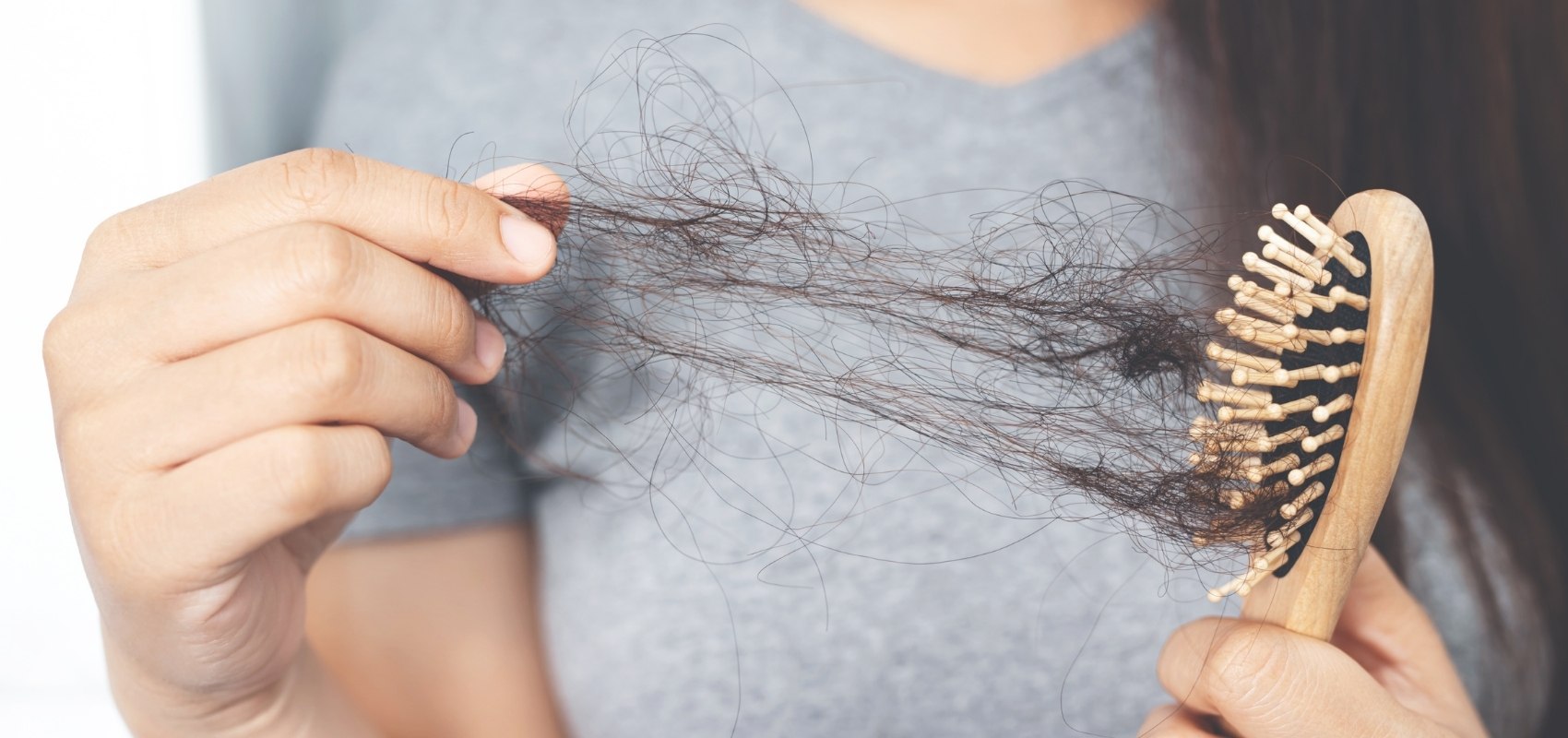
Before assuming hormone therapy is responsible, it is worth ruling out other well-documented causes of hair shedding that frequently overlap with the timing of starting treatment.
- Telogen effluvium from physical or emotional stress, illness, surgery, rapid weight change, or a major life event
- Thyroid dysfunction, which can independently affect hair density and texture
- Nutritional deficiencies, including iron, vitamin D, protein, or zinc
- Medication changes unrelated to hormone therapy
- Underlying autoimmune or dermatologic conditions
- Normal seasonal shedding patterns, which can naturally fluctuate throughout the year
Because several of these factors can overlap in timing with the start of hormone therapy, a clinical evaluation can help identify the most likely cause.
READ MORE: HRT or the Pill for Perimenopause? What to Ask Before Choosing
How to Track Hair Changes During Treatment
Tracking specific details gives your provider useful information instead of a general impression that something has changed.
Step 1: Note When Changes Started
Record the approximate date hair changes began in relation to when you started hormone therapy, changed your dose, or switched delivery methods.
Step 2: Describe the Pattern
Note whether shedding is diffuse across the scalp, concentrated at the crown or temples, or affecting a specific area. Pattern matters clinically, since diffuse shedding and pattern-specific thinning often point to different causes.
Step 3: Track Severity and Frequency
Keep a simple log of how much hair you notice on your pillow, in the shower, or on your brush, and whether this has changed week to week.
Step 4: Record Other Recent Changes
Note any recent illness, major stress, weight changes, new medications, or supplements, since these frequently contribute to shedding independent of hormone therapy.
Step 5: Bring Photos if Possible
A few photos taken from the same angle over several weeks can help your provider see gradual changes more clearly than a description alone.
Step 6: Avoid Starting New Non-Prescribed Hair Products Right Before Your Visit
Introducing a new shampoo, supplement, or non-prescribed hair treatment shortly before an appointment can make it harder to isolate what is actually driving the change.
When to Raise Hair Changes With Your Provider
Hair changes are worth discussing at your next scheduled follow-up in most cases, but certain patterns warrant an earlier conversation.
Bring it up sooner if you notice:
- Rapid or sudden hair loss over a short period
- Visible thinning at the crown, temples, or a defined pattern
- Hair loss accompanied by scalp irritation, redness, or pain
- Hair changes alongside other new symptoms, such as fatigue or skin changes
Do not stop or adjust your hormone therapy dose on your own based on hair changes. A dose change without clinical guidance can affect symptom control in other areas without necessarily addressing the hair concern.
What Your Provider May Evaluate

A hormone therapy clinic should approach hair changes as a clinical question, not a cosmetic afterthought. Depending on your history and symptoms, evaluation may include a review of current hormone levels and recent lab trends, a discussion of family history of pattern hair loss, a review of thyroid and nutritional markers when relevant, and a conversation about whether dose, delivery method, or timing adjustments are appropriate.
If hormone therapy does appear to be a contributing factor, providers may discuss options ranging from monitoring to adjunctive approaches, always weighed against your original reasons for starting treatment in the first place.
Frequently Asked Questions
Is hair loss on TRT permanent?
Outcomes vary depending on the type of hair loss and what is contributing to it. Some hair changes may stabilize, while androgenetic alopecia can progress over time. A provider can evaluate the pattern, timing, family history, and other possible causes before discussing treatment options.
Is hair shedding the same as pattern hair loss?
No. Shedding and pattern hair loss can look different and may have different causes. Telogen effluvium typically causes more diffuse shedding, while androgenetic alopecia tends to produce progressive thinning in characteristic areas of the scalp. A clinical evaluation can help distinguish between them.
Can hair changes occur even when hormone levels are within the expected range?
Yes. Hormone levels are only one part of the evaluation. Genetics, thyroid function, nutritional status, stress, medications, illness, and dermatologic conditions can also contribute to hair thinning or shedding.
Does hair loss mean my hormone therapy dose is too high?
Not necessarily. Hair changes alone cannot determine whether a hormone dose is appropriate. Providers typically consider symptoms, laboratory findings, treatment history, timing, and other possible causes before deciding whether any treatment adjustment is warranted.
When might a dermatologist be needed for hair loss during hormone therapy?
A dermatology evaluation may be appropriate when the cause of hair loss is unclear, thinning continues to progress, scalp symptoms are present, or another hair or skin condition is suspected. Your hormone therapy provider can help determine whether specialist evaluation is appropriate.
Bottom Line
Hair changes during hormone therapy are worth taking seriously, but they are not automatically caused by treatment. Genetics, baseline hormone levels, thyroid function, nutrition, and stress can all play a role, which is why tracking timing, pattern, and severity matters before assuming a cause.
If you are noticing hair changes while on testosterone replacement therapy or women's hormone therapy, BioRestore Health in CT offers lab-based evaluation and follow-up care designed to look at the full clinical picture, not just the symptom in isolation.
Disclaimer: This content is for informational purposes only and is not intended as medical advice, diagnosis, or treatment. Hormone therapy is a medical treatment that requires proper evaluation, blood testing, and physician supervision. Individual outcomes vary based on health history, genetics, lab findings, and clinical response. Always consult with a qualified healthcare provider to determine what is appropriate for your specific health situation.
SOURCES:
Asfour, L., Cranwell, W., & Sinclair, R. (2023). Male androgenetic alopecia. In K. R. Feingold, R. A. Adler, S. F. Ahmed, et al. (Eds.), Endotext. MDText.com, Inc. https://ncbi.nlm.nih.gov/books/NBK278957/
Gupta, S., Bai, J. Q. A., Geng, R. S. Q., & Donovan, J. (2026). The effect of androgen supplementation on hair loss: A systematic review. JAAD international, 26, 20–22. https://doi.org/10.1016/j.jdin.2026.03.011
Gupta, A. K., Economopoulos, V., Mann, A., Wang, T., & Mirmirani, P. (2025). Menopause and hair loss in women: Exploring the hormonal transition. Maturitas, 198, 108378. https://doi.org/10.1016/j.maturitas.2025.108378
Bond, P., Smit, D. L., & de Ronde, W. (2022). Anabolic-androgenic steroids: How do they work and what are the risks?. Frontiers in endocrinology, 13, 1059473. https://doi.org/10.3389/fendo.2022.1059473
Glaser, R. L., Dimitrakakis, C., & Messenger, A. G. (2012). Improvement in scalp hair growth in androgen-deficient women treated with testosterone: a questionnaire study. The British journal of dermatology, 166(2), 274–278. https://doi.org/10.1111/j.1365-2133.2011.10655.x