
BPC-157 is a synthetic peptide derived from a protein found in human gastric juice. Researchers have studied BPC-157 peptide benefits primarily for its potential to support tissue repair and reduce inflammation. While the bulk of the research remains preclinical, a growing body of animal studies and a small number of human trials are beginning to outline where it may have a meaningful clinical role.
Table of Contents
- What BPC-157 Is and How It Works
- What the Research Actually Shows
- BPC-157 Peptide Benefits by Body System
- BPC-157 vs. Other Regenerative Approaches
- Regulatory Status and Safety Considerations
- Things to Know
What BPC-157 Is and How It Works
BPC stands for Body Protection Compound. The peptide itself is a 15-amino-acid sequence that researchers have isolated from a naturally occurring gastric protein. In animal models, it appears to promote healing through several interconnected mechanisms. These include stimulating angiogenesis (the formation of new blood vessels), modulating nitric oxide pathways, and upregulating growth factors involved in tissue repair.
A 2025 literature review published in Pharmaceuticals by Józwiak et al. described BPC-157 as a multifunctional peptide with a wide range of potential applications. However, the authors noted that it lacks FDA approval due to insufficient comprehensive clinical studies confirming human health benefits. That distinction matters significantly.
Understanding the mechanism is not the same as confirming clinical efficacy in humans. Anyone evaluating this peptide should hold both pieces of information at the same time.
What the Research Actually Shows

The honest summary of the current evidence is straightforward: decades of promising animal research exist. However, only three published human clinical trials have been documented as of March 2026. All of them are pilot studies with small sample sizes totaling fewer than 30 subjects across all trials (Peptide Database, 2025).
A 2025 systematic review by Vasireddi et al., published via Sage Publishing, analyzed 36 studies from 1993 to 2024. The researchers found that BPC-157 promotes healing through growth factors and reduced inflammation in musculoskeletal injury animal models. The results were consistent across rodent models. However, the authors acknowledged the significant translational gap between animal and human outcomes.
On the human side, evidence is emerging but remains preliminary. A 2021 study involving 12 patients with chronic knee pain found compelling results. Specifically, 7 out of 12 participants (58.3%) reported pain relief lasting over six months after a single BPC-157 knee injection. Additionally, a 2024 study of 12 patients with interstitial cystitis reported 80-100% symptom resolution following bladder injections (Lee et al., Alternative Therapies in Health and Medicine, 2024).
Furthermore, a 2025 safety study involving just 2 healthy adults showed that an IV infusion of up to 20mg was tolerated with no adverse events.
These results are worth paying attention to. However, they do not constitute conclusive evidence of benefit. Sample sizes this small cannot rule out placebo effect, selection bias, or confounding variables. More rigorous, larger-scale trials are needed before definitive clinical conclusions can be drawn.
BPC-157 Peptide Benefits by Body System
Based on the available preclinical literature and the limited human data, researchers have focused BPC-157 peptide benefits primarily in the following areas:
Musculoskeletal repair: Animal studies consistently show accelerated tendon, ligament, and muscle healing. The knee pain human data, while preliminary, aligns with this finding.
Gastrointestinal health: BPC-157 originates from gastric tissue. Moreover, several animal studies suggest it may support gut lining integrity. Additionally, research indicates it could reduce ulceration and modulate gut motility. No robust human trials exist in this area yet.
Neurological function: Some animal research points to neuroprotective effects. In particular, evidence suggests potential support for nerve regeneration. This remains early-stage research.
Joint and connective tissue: The angiogenic properties observed in animal models may support cartilage and joint tissue recovery. This is why orthopedic sports medicine has been an active area of interest.
Bladder health: The 2024 interstitial cystitis study represents one of the more compelling preliminary human findings. However, replication in larger trials is essential before it can be considered a standard-of-care consideration.
Patients who are also navigating complex hormonal imbalances alongside these physical concerns, including issues like low testosterone symptoms in men, may find that peptide therapy is one component of a broader, integrated care plan rather than a standalone solution.
BPC-157 vs. Other Regenerative Approaches
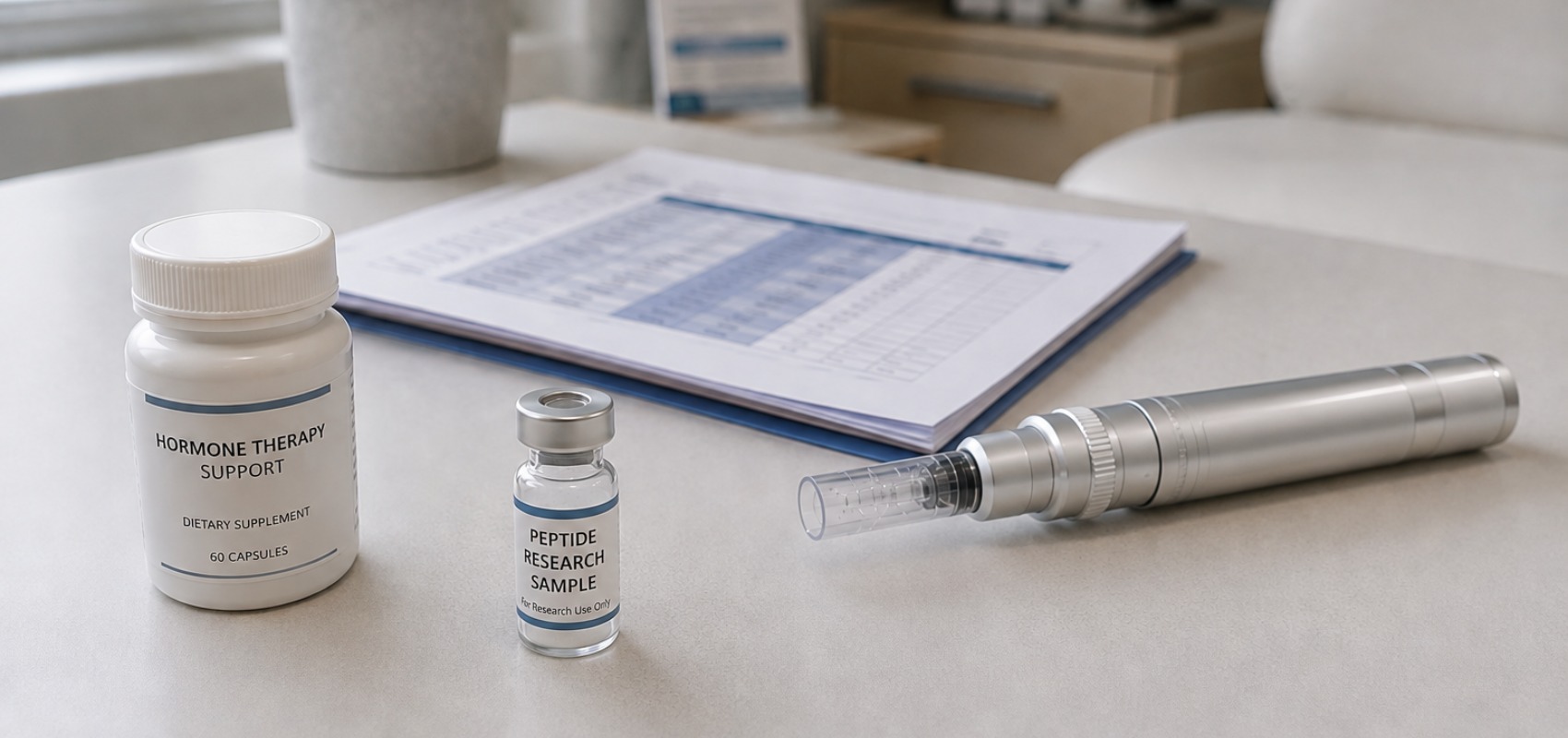
BPC-157 sits within a broader landscape of regenerative and functional medicine tools. Understanding how it compares helps set realistic expectations.
| Approach | Evidence Level | Primary Use Case | FDA Status |
|---|---|---|---|
| BPC-157 | Preclinical + 3 small human trials | Tissue repair, inflammation | Not approved; Category 2 |
| PRP (Platelet-Rich Plasma) | Moderate clinical evidence | Orthopedic, aesthetic healing | Autologous; regulated by use |
| Hormone Optimization (TRT) | Strong clinical evidence | Hormonal imbalance | FDA-approved protocols available |
| Microneedling | Strong aesthetic evidence | Skin repair, collagen stimulation | FDA-cleared devices |
Patients researching hormone therapy before and after outcomes often ask how peptide therapy fits alongside hormonal protocols. The short answer is straightforward: they address different physiological mechanisms. Therefore, they are not interchangeable. In some cases, they may be used as complementary strategies under physician supervision.
Similarly, patients exploring cosmetic regenerative options like microneedling before and after results or microneedling for acne scars are often interested in how regenerative mechanisms overlap across treatments. These are distinct interventions with separate evidence bases. However, the underlying principle of stimulating the body’s own repair processes is shared across approaches.
Regulatory Status and Safety Considerations
This is a non-negotiable part of any honest conversation about BPC-157 peptide benefits. In late 2023, the FDA classified BPC-157 as a Category 2 substance. This means it cannot be commercially compounded due to insufficient safety evidence. This classification reflects the current state of the evidence, not necessarily a final judgment on the peptide’s eventual clinical utility.
The broader peptide therapeutics sector is growing rapidly. The industry is projected to reach $83.75 billion by 2034 (Precedence Statistics, 2025). The BPC-157 specific market was valued at $0.3 billion in 2025. Moreover, it is projected to reach $0.6 billion by 2034, growing at an 8.5% CAGR (Market Intelo, 2026). That commercial interest does not substitute for clinical evidence. However, it does reflect significant investment in the research pipeline.
If you are considering BPC-157, the most critical step is working with a physician. Your doctor can assess your full clinical picture rather than sourcing it independently.
Things to Know
- BPC-157 has only three published human clinical trials as of early 2026. All of them feature very small sample sizes. Animal data, while extensive, does not directly confirm human outcomes.
- The FDA classified BPC-157 as Category 2 in late 2023. This restricts commercial compounding due to insufficient safety data.
- The peptide’s mechanisms, including angiogenesis and nitric oxide modulation, are well-characterized in animal models. However, they are not yet fully validated in human physiology.
- BPC-157 is not a replacement for established treatments. Therefore, it may be considered adjunctive in selected patients under careful physician oversight.
- If you encounter sources selling BPC-157 online without a prescription or clinical assessment, that is a significant red flag given its current regulatory status.
Talk to a Physician Before Adding Peptide Therapy to Your Plan

If BPC-157 is on your radar, a personalized physician evaluation is the only appropriate starting point. At BioRestore Health, Dr. Matthew Stanizzi and the clinical team offer physician-supervised consultations. They assess your full hormonal and physiological picture before any protocol is considered. This is a low-pressure, informational conversation, not a sales process. Book your consultation today and get clarity on whether peptide therapy, or another approach entirely, is the right fit for your goals.
Frequently Asked Questions
Q: What does BPC-157 actually do in the body?
BPC-157 appears to support tissue repair by promoting angiogenesis. Additionally, it modulates nitric oxide pathways and upregulates growth factors involved in healing. This has been consistently observed in animal models across muscle, tendon, ligament, and gut tissue. However, human evidence remains very limited, with only three small-scale pilot studies published as of early 2026.
Q: Is BPC-157 legal in the United States?
BPC-157 is not FDA-approved. Moreover, it was classified as Category 2 in late 2023, which means it cannot be commercially compounded. This does not make it illegal to research or discuss. However, it does significantly limit how and where it can be legitimately administered. Always consult a licensed physician before pursuing any peptide protocol.
Q: How is BPC-157 typically administered?
In research settings and clinical pilots, BPC-157 has been administered via injection. These include subcutaneous, intramuscular, or direct injection into affected joints. Additionally, one small study used intravenous administration. The delivery method depends on the target tissue and clinical context. Oral administration has been studied in animal models but has not been validated in human trials.
Q: Are there risks or side effects associated with BPC-157?
The limited human safety data available suggests short-term tolerability. However, long-term safety in humans has not been established. A 2025 study of two healthy adults showed no adverse events with IV infusion up to 20mg. That is not sufficient data to draw broad safety conclusions. Therefore, physician evaluation before use is essential.
Q: How does BPC-157 compare to PRP therapy?
Both approaches aim to support tissue healing. However, they work through different mechanisms and have different levels of clinical evidence. PRP uses growth factors from your own blood. It has moderate clinical evidence in orthopedic and aesthetic applications. BPC-157 is a synthetic peptide with a more limited human evidence base. A physician can help you understand which, if either, is appropriate for your situation.
Disclaimer: This article is for educational purposes only and does not constitute medical advice. BPC-157 is not FDA-approved and is classified as a Category 2 substance, meaning it cannot be commercially compounded. Peptide therapy should only be considered under the supervision of a licensed medical professional following a full clinical evaluation. Results vary and are not guaranteed. Always consult a qualified physician before beginning any new therapeutic protocol.