What’s In This Guide
- Are Peptides Legal Prescription Medications in the United States?
- Which Doctors Are Qualified to Prescribe Peptides?
- What Peptides Do Doctors Actually Prescribe and for What Purposes?
- How Do You Know If You Are a Candidate for Peptide Therapy?
- What Should You Ask Your Doctor Before Starting Peptide Treatment?
- How Do You Tell a Legitimate Peptide Provider from a Questionable One?
- Can You Get Peptides From Your Doctor? What the Process Looks Like
- Frequently Asked Questions (FAQs)
- Bottom Line
Yes, licensed doctors can prescribe peptides. But the peptide therapy market includes FDA-approved medications, compounded formulations, and unregulated research compounds sold freely online. The line between legitimate medical treatment and a gray-market shortcut is not always visible to patients.
Quick Facts
- Sermorelin remains one of the more legally accessible compounded peptides.
- PT-141/Vyleesi was FDA-approved in 2019 for HSDD.
- In 2023, the FDA restricted 19 peptides from compounding.
- Patients should verify their current regulatory status before treatment.
- Legitimate peptide therapy requires labs, dosing, and monitoring.
Are Peptides Legal Prescription Medications in the United States?

Some peptides are FDA-approved prescription drugs. Others are available through licensed compounding pharmacies under a physician’s order. A third category exists as research-only compounds with no legal clinical prescription pathway.
Tier 1: FDA-Approved Peptides
These are cleared for specific clinical indications and can be prescribed directly. Examples include bremelanotide (PT-141/Vyleesi), which is FDA-approved for acquired, generalized HSDD in premenopausal women.
Tier 2: Compounded Peptides
Licensed 503A and 503B compounding pharmacies can prepare certain peptides for patient-specific use when a licensed physician orders them. The FDA regulates which compounds qualify. In 2023, the FDA placed several widely marketed peptides, including BPC-157, CJC-1295, and Ipamorelin, on its Category 2 list, restricting their use in compounding.
Tier 3: Research-Only Compounds
These carry no FDA approval for human use and have no legal prescription pathway. Products sold online as “research chemicals” fall into this tier. Using them outside a licensed clinical setting carries legal and safety risk that cannot be mitigated by the seller’s labeling.
Patients cannot always determine which tier a marketed peptide falls under. A physician-guided evaluation is the only reliable way to confirm legal status before purchasing or using any compound.
Which Doctors Are Qualified to Prescribe Peptides?
Any physician licensed in the United States can prescribe an eligible peptide, provided that the prescription falls within the applicable state medical practice act governing their license.
A single prescription is not a complete care plan. Do doctors prescribe peptides and then monitor patients closely? In a responsible clinical setting, yes. Follow-up visits and lab reviews are structured before treatment begins and adjusted based on clinical response over time.
Physician specialties with the relevant clinical context include:
- Endocrinology: Direct expertise in hormone regulation and growth hormone axis disorders.
- Urology: Prescribing authority over testosterone and sexual health peptides, including PT-141.
- Internal Medicine: Broad scope for metabolic and systemic peptide applications.
- Functional or Integrative Medicine: Wellness-focused protocols when medically supervised.
- Anti-Aging and Longevity Medicine: Focused on growth hormone secretagogues and body composition optimization.
A general practitioner unfamiliar with peptide protocols may not be the right starting point for patients whose goals involve GH axis optimization or systemic recovery. Specialty directly affects the quality of evaluation, dosing, and monitoring.
What Peptides Do Doctors Actually Prescribe and for What Purposes?
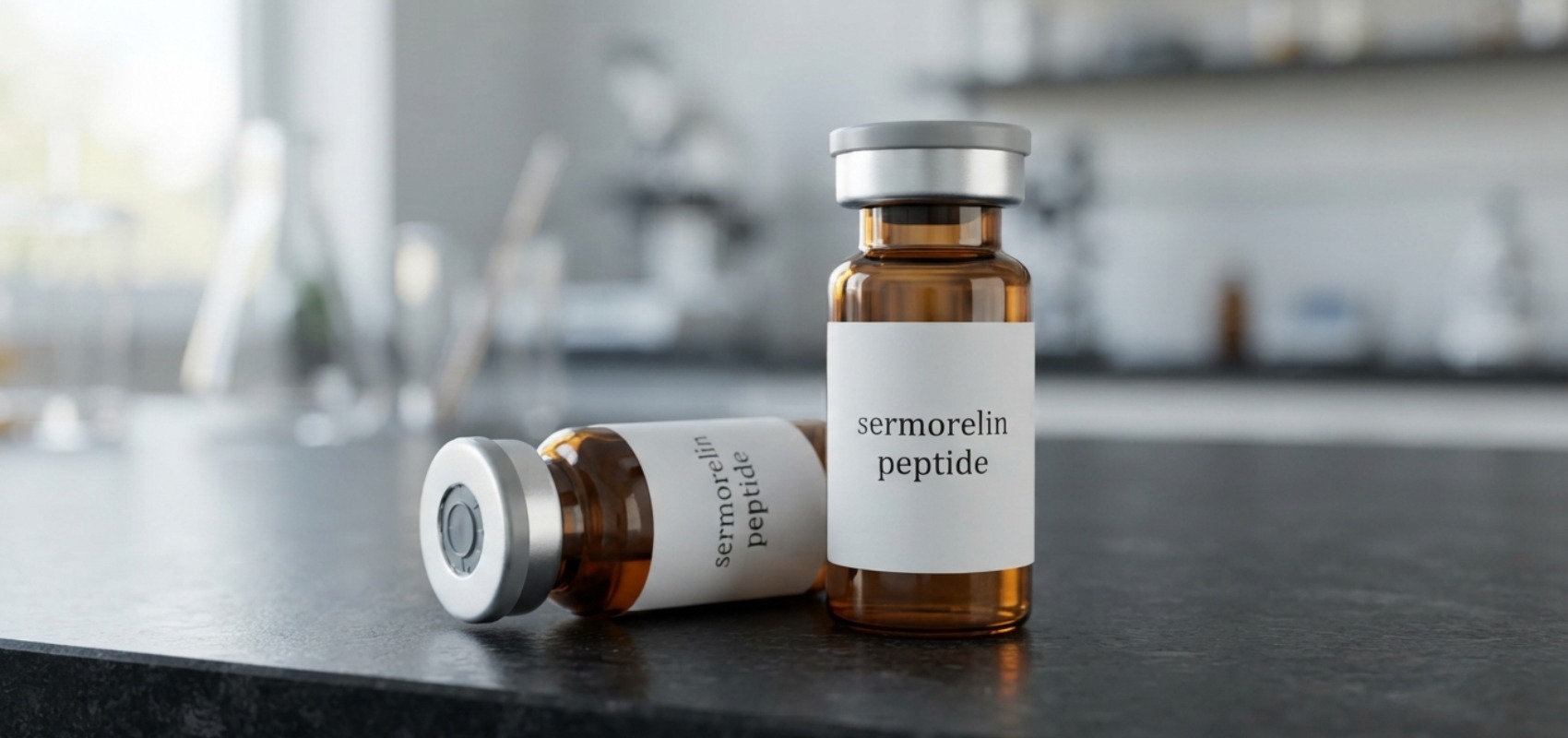
The most commonly discussed peptides in clinical settings fall into several functional categories. Approval and compounding status reflect the regulatory landscape as of June 2026.
|
Peptide |
Primary Clinical Application |
Current Regulatory Status (June 2026) |
|
Sermorelin |
GH axis stimulation, age-related GH decline |
Availability depends on current compounding rules and pharmacy review |
|
PT-141 (Bremelanotide/Vyleesi) |
HSDD in premenopausal women |
FDA-approved |
|
BPC-157 |
Gut repair, tissue recovery |
Removed from Category 2 (April 2026); pending PCAC review |
|
Ipamorelin |
GH axis support, recovery |
Removed from Category 2 (April 2026); pending PCAC review |
|
Thymosin Alpha-1 |
Immune system support |
Removed from Category 2 (April 2026); pending PCAC review |
|
CJC-1295 |
GH secretagogue |
Regulatory status should be verified before prescribing or compounding |
Off-label prescribing may be legal when a licensed clinician documents a valid medical rationale and the patient has completed a proper evaluation.
Patients should ask their provider to confirm the current regulatory status of any peptide before treatment begins, as this landscape continues to evolve.
How Do You Know If You Are a Candidate for Peptide Therapy?
A legitimate evaluation follows a structured clinical process. Baseline lab work is generally expected before peptide therapy begins.
Step 1: Symptom Review and Health History Intake
The provider documents current symptoms, treatment goals, medical history, and any prior hormone or peptide use. The goal is to determine whether symptoms have a physiological basis that peptide therapy could appropriately address.
Step 2: Baseline Lab Work
Ordered before any protocol begins. Relevant markers vary by treatment goal and may include:
- IGF-1 (primary growth hormone axis indicator)
- Fasting glucose and insulin
- Lipid panel
- Thyroid markers: TSH, free T3, free T4
- Relevant hormone panels based on the target protocol (testosterone, estradiol, DHEA-S)
Step 3: Contraindication Screening
The physician reviews whether any conditions disqualify the patient or require modified dosing. Common contraindications include:
- Active or recent malignancy
- Uncontrolled type 2 diabetes
- History of pituitary disorders
- Certain cardiovascular conditions
Step 4: Individualized Treatment Plan
The provider documents a specific protocol covering dosing and delivery method, whether subcutaneous injection, oral, or intranasal. The patient receives a clear explanation of what is being prescribed and the clinical rationale behind it.
Step 5: Monitoring Schedule Confirmed Before the First Dose
Follow-up lab timing, symptom check-in intervals, and dose adjustment criteria should be established before treatment begins.
What Should You Ask Your Doctor Before Starting Peptide Treatment?

Specific, direct questions separate thorough providers from those offering a prescription with minimal clinical process. These ten questions cover the most important areas before any peptide protocol begins.
- Is this peptide FDA-approved or compounded, and which licensed pharmacy will supply it?
- What is the current regulatory status of this peptide as of today?
- What lab work do I need before starting, and what are you specifically looking for?
- What risks or contraindications apply to my personal health history?
- How will my response to treatment be monitored, and at what intervals?
- What side effects should I report, and how quickly should I contact your office?
- Does this peptide interact with any of my current medications or supplements?
- Under what circumstances would you reduce my dose or pause treatment?
- What happens if I do not respond as expected after the initial evaluation period?
- What does stopping treatment look like if discontinuation becomes necessary?
Bringing this list to a consultation evaluates whether the provider’s process meets a reasonable clinical standard. It also quickly surfaces whether a provider is operating with structured oversight or issuing prescriptions without adequate review.
How Do You Tell a Legitimate Peptide Provider from a Questionable One?
The quality of the clinical process separates responsible treatment from a risky shortcut. Clear signals exist on both sides.
|
Green Flags |
Red Flags |
|
Requires lab work before prescribing |
Prescribes at the first visit without any labs |
|
Uses a licensed 503A or 503B compounding pharmacy |
Sources peptides from overseas or unlicensed suppliers |
|
Explains current FDA and regulatory status of each compound |
Avoids or deflects questions about regulatory standing |
|
Establishes a structured monitoring schedule before the first dose |
Offers no follow-up after the initial prescription |
|
Does not guarantee specific outcomes or hard timelines |
Promises rapid results or guaranteed improvements |
|
Coordinates with existing treating physicians when clinically relevant |
Discourages involvement of other providers |
Legitimate providers welcome every question in the previous section. Evasiveness about pharmacy sourcing, monitoring frequency, or FDA classification is clinically significant information about the quality of care being offered.
Can You Get Peptides From Your Doctor? What the Process Looks Like
Getting peptides from your doctor is possible, but only when the prescription is written for a compound with a legal clinical pathway and filled through a licensed pharmacy. The process involves more steps than a standard drug prescription.
What Happens Between Your Consultation and Your First Dose?
After a physician writes a peptide prescription, the compound must be prepared by a licensed 503A or 503B pharmacy. Compounded preparations are not dispensed off a shelf. Patients frequently underestimate how many steps separate the clinical decision from the first dose.
The standard sequence from consultation to first dose:
- Lab results reviewed: The provider confirms baseline markers before finalizing the prescription.
- Prescription written and transmitted: The physician sends the prescription to a partnered compounding pharmacy, specifying the peptide, dosage form, concentration, and quantity required.
- Pharmacy verification and sourcing: The compounding pharmacy verifies the prescription, sources the bulk drug substance from its licensed supplier, and prepares the formulation in a regulated cleanroom environment.
- Quality control before shipping: Quality control procedures vary by pharmacy and applicable regulations.
- Delivery and storage confirmation: Most compounded peptide preparations arrive refrigerated. Storage requirements should be reviewed with the provider or pharmacist before the first dose is administered.
What Are the Storage and Handling Requirements for Compounded Peptides?
Compounded peptide preparations, particularly injectable forms, require refrigerated storage and often specific reconstitution technique. A provider or pharmacist should walk through handling instructions before the preparation arrives, not after.
Key points to confirm before your prescription ships:
- Whether the preparation requires reconstitution with bacteriostatic water and what concentration to use
- Correct refrigeration temperature and shelf life after reconstitution
- Proper injection technique, needle gauge, and site rotation protocol
- How to identify a compromised preparation: cloudiness, visible particles, or unusual color
- Who to contact if a preparation appears damaged on arrival or deteriorates before the use-by date
Frequently Asked Questions (FAQs)
Is it safe to order peptides online without a prescription?
Peptides sold online outside licensed medical channels may not meet standards for sterility, potency, purity, or handling. Products labeled as “research chemicals” have no verified potency or contamination testing. Sourcing peptides outside a licensed clinical framework removes the evaluation and monitoring that make physician-supervised treatment meaningfully safer.
Can peptide therapy be combined with testosterone replacement therapy or other hormone treatments?
It can in selected patients, but only under direct physician oversight. Some protocols pair growth hormone secretagogues with TRT when labs and clinical history support it. Combining treatments increases monitoring complexity and the potential for interactions. A provider should evaluate the full treatment picture before adding any peptide to an existing hormone protocol.
Do all prescription peptides require injection?
Not all of them. Subcutaneous injection is the most common form for compounded GH axis peptides. PT-141 (Vyleesi) is available as an FDA-approved autoinjector. Some peptides also come in intranasal or oral forms, though absorption varies significantly by route. Your prescribing physician should explain the rationale behind the delivery method recommended for your specific protocol.
What side effects should I report to my doctor right away during peptide therapy?
Report any of the following without waiting for a scheduled follow-up: persistent headaches, joint pain or swelling, water retention, changes in fasting glucose, injection site reactions beyond mild redness, or any symptom that feels acutely different from your pre-treatment baseline. Early side effects often signal a dose adjustment rather than a reason to stop treatment.
Can women ask their doctor about peptide therapy, or is it mainly prescribed for men?
Peptide therapy is not gender-specific. Women are prescribed peptides for sexual health, immune support, and GH axis concerns. PT-141 (Vyleesi) is FDA-approved specifically for premenopausal women with HSDD. Candidacy is determined by individual health history, symptoms, and lab findings, regardless of sex.
Bottom Line
For patients in Connecticut, BioRestore Health offers physician-supervised peptide therapy evaluations with lab-based treatment planning. A consultation is a reasonable first step toward understanding whether peptide therapy is appropriate for your specific health profile.
DISCLAIMER:
For patients in Connecticut, BioRestore Health offers physician-supervised peptide therapy evaluations with lab-based treatment planning. A consultation is a reasonable first step toward understanding whether peptide therapy is appropriate for your specific health profile.
SOURCES:
Al Musaimi, O. (2024). Exploring FDA-approved frontiers: Insights into natural and engineered peptide analogues in the GLP-1, GIP, GHRH, CCK, ACTH, and α-MSH realms. Biomolecules, 14(3), 264. https://doi.org/10.3390/biom14030264
U.S. Food and Drug Administration. (2018). Section 503A of the Federal Food, Drug, and Cosmetic Act. https://www.fda.gov/drugs/human-drug-compounding/section-503a-federal-food-drug-and-cosmetic-act
U.S. Food and Drug Administration. (2019). Vyleesi (bremelanotide injection): Prescribing information [Drug label]. https://www.accessdata.fda.gov/drugsatfda_docs/label/2019/210557s000lbl.pdf